Make a Washi Korokoro: Mino Washi Craft Workshop at Ishikawa Paper Goods (Gifu)
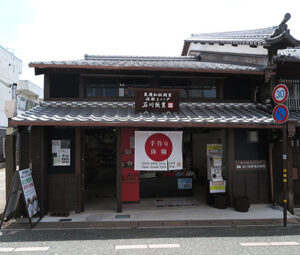
Tucked inside a 270-year-old merchant house on the historic Udatsu Street in Mino City, Gifu Prefecture, the Ishikawa Mino Washi Paper Goods Workshop offers visitors a hands-on introduction to one of Japan’s most celebrated papermaking traditions. Founded in 1902, Ishikawa Paper Goods has spent over a century crafting traditional Japanese goods from Mino washi — a paper with a 1,300-year history that developed from Hon-Minoshi, the hand-made paper inscribed on the UNESCO List of Intangible Cultural Heritage. At the workshop, you can try more than 20 different craft activities, take your finished piece home the same day, and browse over 600 handmade washi goods in the adjoining shop.
Quick Facts
- Type: Hands-on washi craft workshop + souvenir shop
- Address: 1909-3 Motozumi-cho, Mino City, Gifu Prefecture 〒501-3728 (Udatsu Street)
- Phone: 0575-29-3680
- Hours: 10:00–16:00 (weekends and public holidays only — check the website for the monthly schedule)
- Last entry for workshop: 15:00
- Closed: Monday–Friday (open weekends and public holidays; check opening calendar)
- Reservations: Not required for groups under 10 / Required for groups of 10 or more (group bookings outside regular hours can also be arranged)
- Capacity: Up to 45 people per session
- Duration: 30–60 minutes
- Take-home: Yes — finished pieces can be taken home immediately
- Languages: Simple English and Chinese support is available. Please contact the workshop in advance if language assistance is required.
- Website: ishikawa-shigyo.com/global/shop.html

What Is Mino Washi?
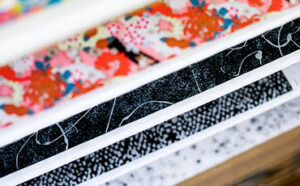
Mino washi is a traditional Japanese paper produced in the Mino region of Gifu Prefecture, along the Nagara and Itadori rivers, for over 1,300 years. It is one of the oldest surviving papermaking traditions in Japan: a sheet of Mino washi dated to 702 CE (the second year of the Taiho era) is preserved in the Shosoin imperial repository in Nara, where it was used as a household census record — making it one of the oldest surviving examples of Japanese paper. The paper is made primarily from kozo (paper mulberry), whose long fibres produce a sheet that is at once thin, translucent, and remarkably strong.
The most prized form, known as Hon-Minoshi, is still made by hand using ancient tools and techniques. It was designated an Important Intangible Cultural Property by the Japanese government in 1969, and in 2014 it was inscribed on the UNESCO List of Intangible Cultural Heritage as part of “Washi: Craftsmanship of Traditional Japanese Hand-made Paper.”
Today, Mino washi is used across a wide range of applications — from traditional lanterns, umbrellas, and fans to stationery, art materials, and decorative goods.
About Ishikawa Paper Goods
Ishikawa Paper Goods was established in 1902 as a washi materials merchant. Over more than a century, it has grown into a manufacturer and wholesaler producing over 1,300 kinds of washi goods entirely by hand, including more than 600 products certified under the Mino Washi Brand certification programme. The company’s craft workshop opened in May 2016, bringing its manufacturing heritage directly to visitors.
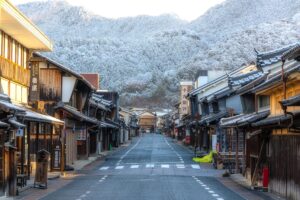
The workshop is housed in a merchant building that is over 270 years old, situated on Udatsu Street — a nationally designated Important Preservation District for Groups of Historic Buildings, where merchant houses built in the late Edo and early Meiji periods still line the street. The building itself sits beneath one of the traditional “udatsu” fire walls that give the street its name. Visitors from over 45 countries have taken part in workshops here.
Workshop Experience

The workshop offers over 20 craft activities, all using Mino washi. Every finished piece is unique. Staff are on hand throughout, and all activities use pre-prepared base materials, so no prior experience or artistic confidence is required. Finished items can be taken home immediately after the session.
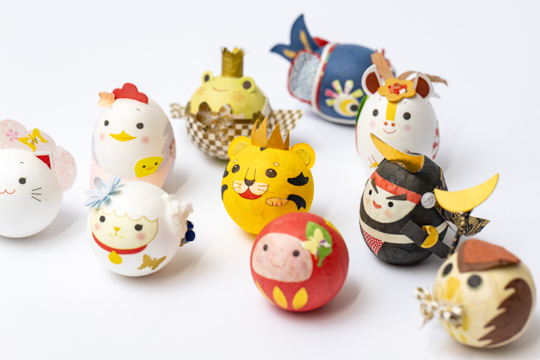
The signature activity — and the most popular — is the Washi Korokoro, a hand-decorated self-righting doll (okiagari koboshi) made from layers of washi. “Korokoro” means tumbling, and these rounded figures are a traditional Japanese good-luck charm, symbolising resilience: “fall seven times, rise eight” (nanakorobi yaoki). Designs range from animals to figures from Japanese history and folklore.
Workshop Menu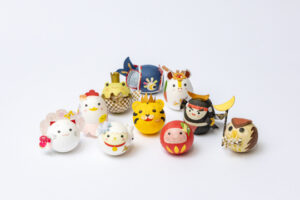
Washi Korokoro (self-righting doll) — ¥1,210 / ¥1,320 / 30–60 min (¥1,320 for the Warring States series and Koinobori designs; ¥1,210 for all others)
Designs: Rabbit, Cat, Owl, Kabuto (Samurai helmet), Ninja, Princess Kaguya, Beckoning Cat (Maneki-neko), Frog, Goldfish, Shiba Inu, Koinobori Red, Koinobori Blue, Zodiac series (12 animals), Warring States series (Nobunaga, Ieyasu, Hideyoshi, Nohime, Mitsunari)
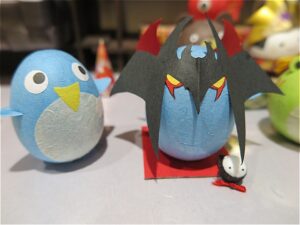
Pictured here is one visitor’s own free-form creation. Beyond the set menu of characters and animals, guests are welcome to mix colors, shapes, and materials to design something entirely their own — so finished pieces can look quite different from the standard designs.
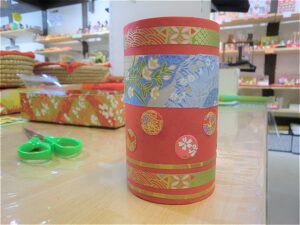
Washi Pen Stand (also usable as glasses stand) — ¥1,100 / 30–60 min
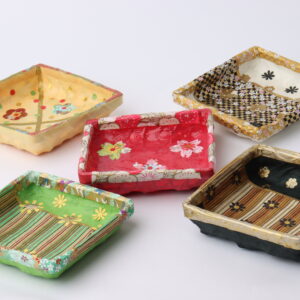
Washi Paper Dish — ¥1,210 / 30–60 min
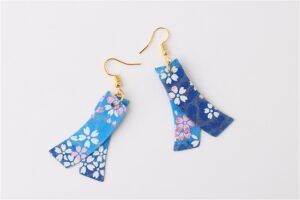
Washi Earrings / Pierced Earrings — ¥1,320 / 30–60 min
Washi Bookmark (1 piece) — ¥770 / 30–60 min
All prices are tax-inclusive. New activities are added regularly — check the website for the current menu.
Reservations and Practical Information
Walk-ins are welcome for groups of fewer than 10 people — no reservation needed. Groups of 10 or more should book in advance by phone or online form; group bookings outside regular opening hours can also be arranged on request.
- Reservations: Online form at ishikawa-shigyo.com/contact/shop.html / Tel: 0575-29-3680
- Groups of 10+: Reservation required (a gift is presented to groups who book)
- Payment: On-site (cash and card — please confirm on booking)
Getting There
Mino City is accessible from Nagoya in approximately 80–90 minutes. Take the JR Chuo Line or Meitetsu to Mino-Ota Station, then transfer to the Nagaragawa Railway (Nagara River Railway) to Mino-shi Station (about 37 minutes from Mino-Ota). The workshop is a 10-minute walk from Mino-shi Station. Alternatively, a direct highway bus runs from Nagoya and Gifu to Mino City.
- By car from the Tokai-Hokuriku Expressway: take the Mino IC exit and follow National Route 156 for about 5 minutes.
- By bus: Gifu Bus Gifu-Mino Line to “Udatsu no Machinami-dori” stop, then 2 minutes on foot.
- Parking: Use the Mino City municipal car park (5-minute walk). Tour buses should use the Kanko Fureai Hiroba coach park.
Driving directions from major nearby cities:
- From Nagoya: Nagoya Kanjo-sen IC (Nagoya Expressway) → Ichinomiya JCT → Tokai-Hokuriku Expressway → Mino IC / approx. 67 km / approx. 60 min
- From Takayama: Takayama Nishi IC (Chubu-Jukan Expressway) → Hida Kiyomi IC → Tokai-Hokuriku Expressway → Mino IC / approx. 100 km / approx. 75 min
- From Shirakawa-go: Shirakawa-go IC (Tokai-Hokuriku Expressway) → Mino IC / approx. 110 km / approx. 75 min
- From Gujohachiman: Gujohachiman IC (Tokai-Hokuriku Expressway) → Mino IC / approx. 28 km / approx. 17 min
- From Chubu Centrair International Airport: Centrair Higashi IC (Chita Oudan-do) → Nagoya Expressway / Mei-Kanjo → Ichinomiya JCT → Tokai-Hokuriku Expressway → Mino IC / approx. 95 km / approx. 80 min
- From Toki Premium Outlets: Toki IC (Chuo Expressway) → Toki JCT → Tokai Kanjo Expressway → Mino-Seki JCT → Tokai-Hokuriku Expressway → Mino IC / approx. 39 km / approx. 30 min
Udatsu Street and Surroundings
Udatsu Street (うだつの上がる町並み) is one of the best-preserved historic townscapes in central Japan. The street takes its name from the decorative fire walls — udatsu — that project upward from the rooflines of merchant houses, which wealthy traders added as both fire protection and a display of prosperity. The Japanese expression “udatsu ga agaranai” (unable to raise one’s udatsu) still means to be stuck in life or unable to get ahead.
The preservation district contains merchant houses built in the late Edo and early Meiji periods, many of which operated in the washi trade. The Mino Washi Museum (美濃和紙の里会館 / MINO-WASHI Museum) is a short distance away, and the area is well-suited to a half-day itinerary combining craft experience, historic architecture, and lunch at one of the local restaurants.
For more information on Mino City sightseeing, visit the Mino City Tourism Association website: minokanko.com
Frequently Asked Questions
Do I need to book in advance?
Groups of fewer than 10 people can walk in without a reservation and will generally be served immediately. Groups of 10 or more must book in advance.
How long does the workshop take?
Each activity takes between 30 and 60 minutes. The workshop closes to new entrants at 15:00, so plan to arrive before then.
Is the workshop available every day?
No. The workshop is open on weekends and public holidays only. The monthly schedule is posted on the website — always check before visiting.
Can children take part?
Yes. The activities are designed to be accessible to all ages. The base materials and staff assistance mean that even young children can complete a piece successfully.
Can I take my finished piece home on the same day?
Yes. All finished items can be taken home immediately after the session.
Is English support available?
Simple English and Chinese support is available. Please contact the workshop in advance if language assistance is required.
How many people can participate at once?
Up to 45 people per session. For groups of 10 or more, advance booking is required.
What is Hon-Minoshi?
Hon-Minoshi is the highest grade of Mino washi, made entirely by hand using traditional tools and pure kozo fibre. It was designated an Important Intangible Cultural Property in 1969 and is part of the UNESCO-inscribed “Washi” tradition.
Why Visit
Mino washi is a tradition that has been passed down in this region for over a millennium. The merchant houses along Udatsu Street were built by traders who grew wealthy in the washi trade, and that history is still visible in the buildings themselves. At the Ishikawa workshop, you do not simply look at a display: you leave with something made from the same paper — shaped, layered, and coloured by your own hands. The Washi Korokoro in particular has a quality that photographs rarely capture: the satisfying weight of the finished doll, the warmth of the layered paper, and the quiet pride of making something that turns out better than you expected. It is a craft experience and a one-of-a-kind keepsake in one.