A 1,000-Year-Old Craft, 5 Minutes from the Station
Most visitors to Hakone come for the hot springs, the mountain air, and a clear-day view of Mt. Fuji. Very few know that five minutes from Hakone-Yumoto Station, there’s a small workshop where you can put your hands into water, feel plant fibers swirl around a bamboo frame, and walk out an hour later holding a sheet of paper you made yourself — paper that, if treated well, could outlast almost anything printed on industrial stock today.
Washi no Iori opened in January 2026, and it may be the quietest, most absorbing 60 minutes you’ll spend in Hakone.
What Is Washi — and Why Does It Matter?
Washi (和紙) is traditional Japanese handmade paper, made from plant fibers — most commonly kozo, a type of mulberry. Unlike machine-made paper, which pulps and presses fibers in bulk, washi is formed one sheet at a time by hand: a wooden frame is lowered into a vat of fiber-laden water, lifted out, and rocked gently until the fibers settle into an even, translucent layer.
The result is paper with a texture, warmth, and durability that industrial paper can’t replicate. In 2014, UNESCO added traditional Japanese washi-making to its list of Intangible Cultural Heritage — recognition of a craft that has been practiced, without fundamental change, for over a thousand years.
Washi no Iori specializes in Echizen washi, from Fukui Prefecture — one of Japan’s oldest papermaking traditions, with a history stretching back over 1,500 years. It’s not decorative craft. It’s a living material tradition, and this workshop puts it directly in your hands.
The Workshop
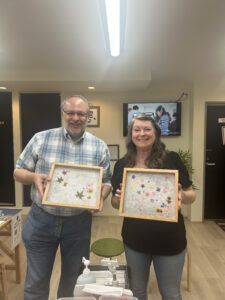
The studio is calm, clean, and deliberately small. Washi no Iori operates on a fully reservation-only basis, with a maximum of five to six participants per session. This isn’t incidental — it’s a considered choice. The owner provides instruction in Japanese and English, and offers Chinese-language support via tablet translation during the experience. The intimate format means you’ll actually learn what you’re doing, not just follow along in a crowd.
The space itself is worth arriving early for. It’s the kind of place that feels like it was designed to make you slow down — a rare thing in a resort town.
What You’ll Do
The session begins with a short explanation of washi — its materials, its history, and why Echizen washi in particular has endured for so long. Then you move to the vat.
You lower a wooden frame into water clouded with kozo fibers. You lift it slowly, letting the water drain, the fibers settling across the surface of the screen in a thin, even layer. Then you rock the frame — forward, back, side to side — to encourage the fibers to lock together. It takes a few tries to get the rhythm right. When you do, something clicks.
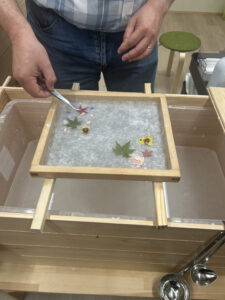
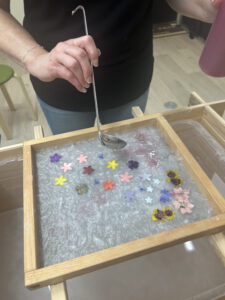
After forming your sheets, you decorate them: flower petals, pressed leaves, colored paper scraps, whatever appeals to you. Each sheet becomes its own thing. The sheets go into a specialized dryer, and while you wait, you watch a short documentary about Echizen washi — its villages, its craftspeople, the tools that haven’t changed in centuries.
Three Workshop Styles to Choose From
Washi no Iori offers three workshop variations, all included at the same price:
- Course A — Original Shikishi Card: Use pressed flowers and your own designs to create a decorative shikishi card.
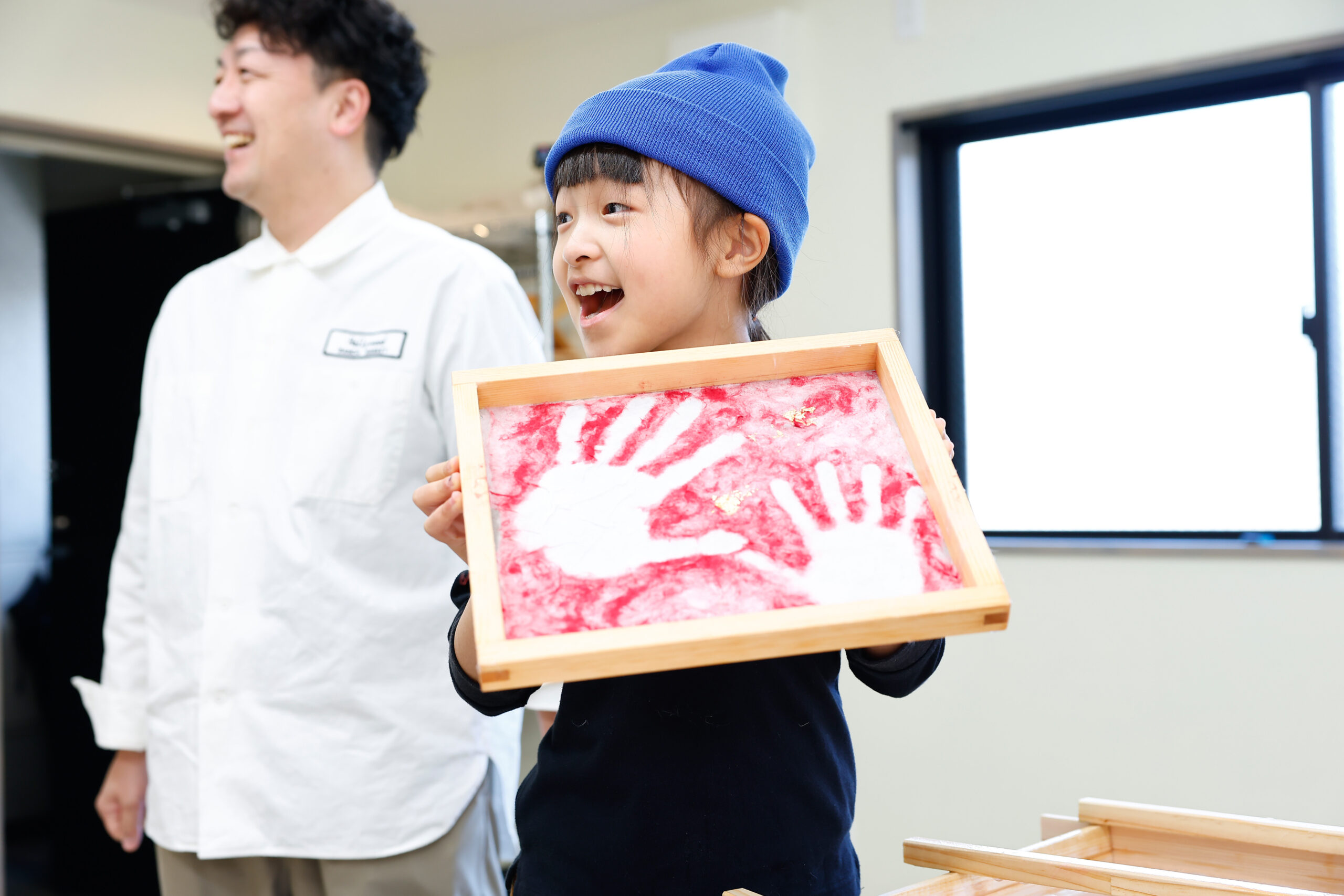
- Course B — Handprint Card: The same shikishi size as Course A, but designed around handprints — a popular choice for families and parents with young children.
- Course C — Postcard: Make a washi postcard you can actually send — just add a stamp and it’s ready to mail.
All courses are available at the standard session price. If you’re unsure which to choose, the owner is happy to advise on the day.
The Surprise of Washi
People expect washi to feel fragile. It doesn’t. Hold a finished sheet up to the light and it glows — translucent, fine-grained, almost alive. Then try to tear it. You’ll find it harder than you expected.
Washi made with traditional methods can last over a thousand years under the right conditions. There are washi documents in Japan that predate the printing press. The sheet you make in this workshop will probably outlast your phone, your laptop, and most things you bought this year.
That’s worth sitting with for a moment, while the fibers are still drying.
Getting There
Washi no Iori is a five-minute walk from Hakone-Yumoto Station — the gateway to the Hakone resort area. From Tokyo, take the Romancecar express from Shinjuku (about 85 minutes) or the Odakyu Line to Odawara and transfer to the Hakone Tozan Railway. No cable car, no bus, no complicated transfer.
It fits naturally into almost any Hakone itinerary — before heading up the mountain, after coming back down, or as the main event for a half-day trip from Tokyo.
At a Glance
| Item | Details |
|---|---|
| Location | Hakone-Yumoto, Kanagawa — 5 min walk from station |
| Experience | Echizen washi papermaking (choose from Course A, B, or C) |
| Duration | Approx. 60 min |
| Price | ¥3,300 per person (1 sheet) — opening price, subject to future change Private 1-hour plan: ¥20,000 (approx. 5–8 sheets) |
| Language | Japanese, English; Chinese via tablet translation |
| Booking | Reservation required — online or Instagram DM (@washino_iori) |
| Payment | Card / QR code only (no cash) |
| Group Size | Up to 5–6 people |
| Website | washikobo.jp |
FAQ
Do I need to book in advance?
Yes — Washi no Iori operates on a fully reservation-only basis. Book via the online reservation site or by sending a DM to @washino_iori on Instagram.
Is the experience suitable for children?
Yes. The papermaking process is gentle and hands-on, making it accessible to older children and adults alike. Course B (handprint card) is especially popular with families. It’s a particularly good activity for families who want something quieter and more tactile than typical tourist attractions.
Is English supported?
Yes. The owner provides instruction in English as well as Japanese. Chinese-language support is available via tablet translation during the experience.
Can I pay with cash?
No — Washi no Iori accepts card payments and QR code payments only. Please ensure you have a payment method available before visiting.
What should I wear or bring?
No special equipment is needed. You may get slightly wet during the papermaking process, so avoid clothing you’d prefer to keep completely dry. Everything else is provided.
What’s the difference between Course A, B, and C?
Course A creates a decorative shikishi card using pressed flowers and your own design. Course B uses the same shikishi format but incorporates handprints — great for families. Course C produces a postcard-sized sheet ready to stamp and send. All are included at the same session price.
Is there a private group option?
Yes — a private 1-hour plan is available for ¥20,000, during which you can make approximately 5–8 sheets. Contact the studio directly to arrange.
Information confirmed with Washi no Iori as of May 2026. Prices listed are opening prices and subject to future change. Please confirm current details with the studio before your visit.