Here’s what I won’t sugarcoat: one day in Okinawa is not enough. Not even close. But if that’s what you’ve got — a tight itinerary, a connecting trip, the universe just being unkind — this plan makes every single hour count.
A perfect day in Okinawa by rental car covers roughly 120 kilometers of southern and central highlights: Shuri Castle for Ryukyu history, a coastal drive north on Route 58, Cape Manzamo’s dramatic limestone cliffs, lunch at American Village, a long afternoon at one of three beach options, and a proper Pacific sunset to close it out. You won’t see everything. But you’ll see the essence — and understand immediately why people keep coming back.
[Photo: Okinawa’s dramatic coastline — Cape Manzamo or Shuri Castle grounds]
Before You Start: You Need a Rental Car
There’s no getting around this. The monorail covers Naha and not much else. Buses to the beaches run infrequently enough that you’d spend half your day waiting. The best parts of Okinawa — the cliff viewpoints, the clear-water beaches, the coastal road that makes you question why you ever lived landlocked — require the freedom to stop when something looks too good to pass up.
Rental Car Basics
- What you need: International Driving Permit (IDP) from your home country, your regular license, and a credit card for the deposit. Get the IDP before you leave — you can’t arrange one in Japan.
- Where to rent: Naha Airport is the most convenient pickup point. Major chains include Times Car Rental, Orix, Nippon, and Toyota. Book online in advance — it’s significantly cheaper.
- Cost: ¥4,000–7,000 per day for a compact car. Budget ¥2,000–3,000 extra for gas.
- Driving basics: Left-hand side of the road, same as mainland Japan. Speed limits around 40–60 km/h on regular roads. Request English GPS at pickup — Google Maps works perfectly here, but having both doesn’t hurt.
What to have in the car: Multiple water bottles (non-negotiable in the heat), SPF 50+ sunscreen, beach towels, a change of clothes, and snacks from a convenience store. See our complete guide to Japanese convenience stores for what’s worth picking up before you head out.
Morning: Shuri Castle (8:30am–10:00am)
Start here for three reasons: you beat the heat, you avoid the worst crowds, and understanding Okinawa’s history before you see the rest of the island makes everything else more meaningful.
Shuri Castle was the seat of the Ryukyu Kingdom from the 15th to 19th century — an independent maritime trading nation that blended Chinese, Japanese, Korean, and Southeast Asian influences before Japan annexed it in 1879. The main hall burned down in a devastating fire in October 2019. Reconstruction has been ongoing with completion targeted for autumn 2026, using traditional building methods by master craftspeople. The exterior structure was completed in mid-2025; interior finishing work is in its final stages as of publication.
Don’t skip it because of the reconstruction. The UNESCO-listed stone walls, gates, and gardens survived intact. Watching traditional craftspeople restore the palace using centuries-old techniques is something you can only see right now — and the site still carries profound historical weight.
- Opens: 8:30am
- Entry fee: ¥400 (reduced during reconstruction)
- From Naha hotels: 15–20 minutes by car
- Time needed: 1–1.5 hours
- Parking: Free nearby
Wear comfortable shoes — there’s walking and stairs. Eat breakfast before you arrive if you can. There are Okinawa soba shops nearby, but you’ll maximize your morning by eating at the hotel first.
Late Morning: Route 58 North and Cape Manzamo (10:30am–12:15pm)
Leave Shuri Castle and head north on Route 58. This is where Okinawa starts feeling like an island. The ocean sits on your left the entire way, and when the light hits the water right, you’ll understand exactly why people come here.
The drive to Cape Manzamo takes 45–60 minutes depending on traffic. You’ll pass through areas where US military bases dominate the landscape — Okinawa hosts more US military personnel than anywhere else in Japan, and the American influence shows in the restaurants, the English signs, even the occasional pickup truck. As you push north, the development thins. More tropical vegetation, clearer water, fewer buildings.
[Photo: Cape Manzamo’s elephant-trunk rock formation over turquoise water]
Cape Manzamo (万座毛) — 11:30am–12:15pm
Nature did all the work here. Dramatic limestone cliffs drop into absurdly blue water, and a rock formation that actually looks like an elephant’s trunk juts into the ocean. The name translates roughly to “a plain that seats ten thousand people” — supposedly because a king once declared the grassy area large enough for that.
- Entry: Free
- Parking: Free or small fee depending on section
- Walk to viewpoint: 10–15 minutes on paved paths
- Time needed: 30–45 minutes
The wind can be strong up there — hold onto your hat and your phone. The water is the kind of blue that makes you wonder if phone cameras make colors more saturated, or if it actually looks like that. (It really looks like that.) Souvenir shops and restrooms are at the parking area — use them before continuing.
Lunch: American Village (12:30pm–2:00pm)
Head south from Cape Manzamo about 15–20 minutes toward the Chatan area. American Village is impossible to miss — look for the Ferris wheel and colorful buildings that seem transplanted from a Southern California boardwalk.
This place is genuinely weird, in the best possible way. It’s a shopping and entertainment complex built on former US military housing, designed to feel American but filtered entirely through Japanese aesthetics. Young Japanese tourists love it. American military families shop here. Foreign tourists are confused by it, then end up spending two hours there. By midday you’ll be grateful for the air conditioning regardless.
What to eat here:
- Taco rice — Okinawa’s greatest contribution to world cuisine. Taco meat, cheese, lettuce, tomatoes, salsa, over rice. Sounds wrong until you eat it. Then you’ll want it again tomorrow.
- Okinawa soba — thick wheat noodles in pork broth with pork belly and green onions. Nothing like mainland buckwheat soba.
- Goya champuru — stir-fried bitter melon with tofu, egg, and pork. Quintessentially Okinawan.
Budget ¥1,500–2,000 per person for a solid lunch. After eating, take 15 minutes to walk the boardwalk — Sunset Beach is right next door if you want to make this your beach stop and save an hour of driving.
Afternoon: Choose Your Beach (2:00pm–5:00pm)
Pick one beach and commit. Trying to hit multiple spots means you’ll feel rushed at all of them. Here are your three realistic options:
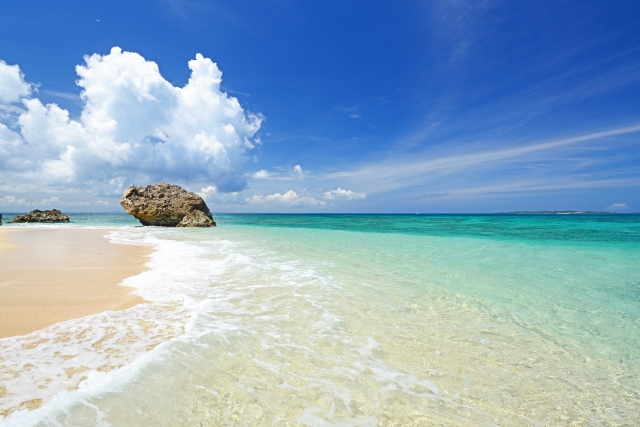
[Photo: Okinawan beach with crystal-clear turquoise water]
Emerald Beach (エメラルドビーチ) — Best Facilities
Part of Ocean Expo Park, 40–45 minutes north from American Village. White sand, incredibly clear water, lifeguards during season, showers, changing rooms, lockers. Can combine with the aquarium. Seasonal operation April–October. Free to swim (¥500 parking for the park). Gets crowded on summer weekends.
Mibaru Beach (ミーバル) — Quietest Option
Southeast coast, 30–35 minutes from American Village. Less touristy, great for snorkeling, shallow and calm water. Basic facilities only — no resort-level amenities. Free parking. Faces east, which means no sunset from here (you’d need to drive west for that).
Sunset Beach — Maximum Convenience
Literally five minutes from American Village. Not the most stunning beach in Okinawa, but you save an hour of driving and gain an hour of actual beach time. Good facilities. Perfect if you want to watch the sun drop into the Pacific without planning another move.
Beach safety: Jellyfish season runs May–October (worst July–August). Stick to designated swimming areas at major beaches — they have protective nets. Reapply SPF 50+ every 90 minutes. The Okinawan sun is more aggressive than it looks. Stay hydrated — the heat and humidity will catch up with you faster than you expect.
Optional: Okinawa Churaumi Aquarium
If you’re choosing Emerald Beach anyway, the Okinawa Churaumi Aquarium is right there in Ocean Expo Park. It’s genuinely world-class — the main Kuroshio Sea tank holds 7,500 cubic meters of water and houses multiple whale sharks. Minimum two hours to see it properly.
- Entry: ¥2,180 adults
- Hours: 8:30am–8:00pm (March–September), 8:30am–6:30pm (October–February)
- Whale shark feeding: 3:00pm and 5:00pm
Honest take: don’t try to do both the aquarium and a full beach afternoon. Pick one. If the weather’s bad or you’re traveling with kids, the aquarium is an excellent call. Otherwise, the beach wins — you can see aquariums in other cities. Okinawa’s water is harder to replicate.
Evening: Sunset and Return (5:00pm onwards)
If you chose Sunset Beach or Emerald Beach, stay put for the sunset. Summer sunset runs 7:15–7:30pm; spring and fall around 6:00–7:00pm; winter as early as 5:30pm. Plan your beach exit accordingly.
For the return drive: from northern beaches or the aquarium, Route 58 south to Naha takes 60–90 minutes. From Sunset Beach, 30–40 minutes. Expect some traffic on Route 58 heading into Naha between 5:30–7:00pm.
Dinner options back in Naha:
- Kokusai Street (国際通り) — the main tourist drag, walkable from most hotels, extensive food options
- Route 58 stops — dozens of restaurants along the return drive if you’d rather not wait until Naha
- Hotel restaurant or convenience store — legitimately fine after a full sun-and-driving day
Okinawan dinner specialties worth trying: rafute (braised pork belly, slow-cooked until it melts), umibudo (sea grapes — little beads of seaweed that pop in your mouth), Orion Beer (the local lager, crisp and perfect after a beach day), and awamori (Okinawa’s distilled spirit, stronger than sake, usually served on rocks or mixed). For a deeper dive into what to drink across Japan, see our Japanese alcohol guide.
One-Day Okinawa Itinerary at a Glance
| Time | Stop | Location | Duration | Notes |
|---|---|---|---|---|
| 8:30–10:00 | Shuri Castle | Naha | 1.5 hrs | Reconstruction ongoing; grounds open |
| 10:30–11:30 | Drive north on Rt. 58 | West coast | 1 hr | Ocean on your left the whole way |
| 11:30–12:15 | Cape Manzamo | North coast | 45 min | Free entry; can be very windy |
| 12:30–14:00 | Lunch | American Village | 1.5 hrs | Try taco rice; AC break |
| 14:00–17:00 | Beach time | Your choice | 3 hrs | Emerald / Mibaru / Sunset Beach |
| 17:30–18:30 | Sunset | West-facing beach | 1 hr | Sunset Beach is ideal; Mibaru faces east |
| 18:30–19:30 | Return drive | Route 58 south | 1 hr | Allow extra time for traffic |
| 19:30+ | Dinner in Naha | Kokusai Street / hotel | — | Try rafute, Orion Beer, awamori |
Total driving: ~120km | Full day: ~11 hours | Budget per person: ¥15,000–20,000 (~$100–140 USD)
Practical Tips
Best Time to Visit
Best overall (April–June, September–October): Warm but manageable (25–28°C), ocean swimmable, fewer crowds, better prices. This is when I’d go.
Peak season (July–August): Beach weather guaranteed but hot, humid, jellyfish season, and school holiday crowds. Prices are highest.
Off-season (November–March): Mild temperatures (15–20°C), very few tourists, cheapest prices. Fine for sightseeing; not beach weather for most visitors.
Typhoon watch: Season officially runs June–November. Check forecasts before booking. A direct hit means flights canceled, everything closed. It doesn’t happen every year, but when it does, plans are over.
Rainy Day Alternatives
If the weather doesn’t cooperate: Okinawa Prefectural Museum in Naha (excellent Ryukyu history exhibits), Okinawa World (Gyokusendo cave system plus traditional crafts and performances), the Churaumi Aquarium (perfect indoor option), or Ashibinaa Outlet Mall near the airport. Shuri Castle has covered walkways and is worth visiting rain or shine.
One Day Is Just the Beginning
One day in Okinawa is like one bite of an incredible meal — you get the idea, you understand why people love it, and you immediately want more. What you’ll miss: the Kerama Islands (pristine beaches and world-class diving), proper snorkeling time, northern villages, and the slow pace that defines island life here. What you’ll get: a real sense of Okinawa’s unique history, that coastline, the cultural fusion that exists nowhere else in Japan, and clear evidence that you need to come back for longer.
The island operates on its own clock — slower, less concerned with efficiency, shaped by centuries of maritime independence rather than mainland Japanese conventions. One day is an introduction. The real relationship starts when you come back with a week to spare.
Recommended Articles↓↓
- One Perfect Day in Kumamoto: The Castle City You’re Probably Skipping
- Japanese Alcohol Guide: Sake, Shochu, Awamori and More
- Japanese Convenience Stores: The Complete Konbini Guide
FAQ: One Day in Okinawa
Do I need a rental car to do Okinawa in one day?
Yes, without question. The Naha monorail covers the city center only. Buses to the beaches and major sights outside Naha run infrequently and don’t connect efficiently. Without a rental car, you’ll waste several hours waiting for connections and won’t reach the best coastline or beaches at all. Book online in advance and bring your International Driving Permit — you can’t get one after arriving in Japan.
Is Shuri Castle worth visiting while the main hall is still under reconstruction?
Yes. The main hall is approaching completion (targeted autumn 2026), but the surrounding UNESCO World Heritage elements — the stone walls, Shureimon Gate, ornamental gates, and gardens — survived the 2019 fire intact and remain impressive. The reconstruction itself is worth seeing: traditional craftspeople using centuries-old building methods. Entry has been reduced to ¥400 during the rebuild period, and observation decks give you views of the restoration work.
Which beach is best for a one-day Okinawa trip?
It depends on your priorities. Emerald Beach in the north offers the best facilities and clearest water but requires the most driving. Sunset Beach next to American Village saves you an hour of travel and is ideal if you want to maximize water time over scenery. Mibaru Beach on the southeast coast is the quietest and best for snorkeling, but note it faces east — no sunset views from there. If you can only pick one and you want the classic Okinawa experience, Emerald Beach is worth the drive.
What is taco rice, and where can I try it in Okinawa?
Taco rice is Okinawa’s most famous dish and a direct product of the American military influence on the island. It’s exactly what it sounds like: the ingredients of an American taco — seasoned ground beef, shredded cheese, lettuce, tomato, and salsa — served over a bed of white rice. It was invented in Okinawa in the 1980s as cheap, filling food for soldiers. American Village in Chatan has multiple restaurants serving it, and it appears on menus across the island. It sounds like an odd combination until you taste it, and then it makes complete sense.
When is the best time of year to visit Okinawa?
April through June and September through October offer the best overall conditions — warm but not extreme heat (25–28°C), swimmable ocean, significantly fewer tourists than July–August, and more reasonable prices. July and August are guaranteed beach weather but come with peak crowds, peak prices, serious humidity, and jellyfish season. December through February is mild and cheap but not beach weather. If you’re going specifically for the water, avoid January and February.
How much does a full day in Okinawa cost?
Budget ¥15,000–20,000 per person (approximately $100–140 USD) for a comfortable day. That breaks down as: rental car ¥5,000–7,000, gas ¥2,000–3,000, Shuri Castle ¥400, lunch ¥1,500–2,000, dinner ¥2,000–3,000, and miscellaneous ¥2,000. The aquarium adds ¥2,180 if you choose that. Bring extra cash — not all places take cards, and ATMs accepting foreign cards aren’t always convenient away from Naha.
Is the Okinawa Churaumi Aquarium worth visiting on a one-day trip?
It’s world-class — genuinely one of the most impressive aquariums anywhere, with multiple whale sharks in a single tank. But it requires at least two hours to see properly, and combining it with a full beach afternoon means feeling rushed at both. If weather is bad, if you’re traveling with children, or if marine life is your main interest in Okinawa, the aquarium is an excellent choice. If you’re choosing between the aquarium and an afternoon in the water, the beach wins.
Can I visit Okinawa without speaking Japanese?
Yes, though English is less widely spoken here than in Tokyo or Osaka. Tourist areas have English signage, and restaurant menus in places like American Village often have English options or pictures. Google Translate’s camera function is invaluable for menus at smaller local restaurants. Most younger locals have studied some English and will make genuine efforts to help. Okinawans are generally friendly and patient with visitors who are clearly trying. Basic phrases (thank you, excuse me, one of these please) go a long way.
Published: May 2026 | Information checked at time of writing. Admission fees, operating hours, and reconstruction timelines are subject to change — verify directly with venues before your visit. All prices in Japanese yen (¥).