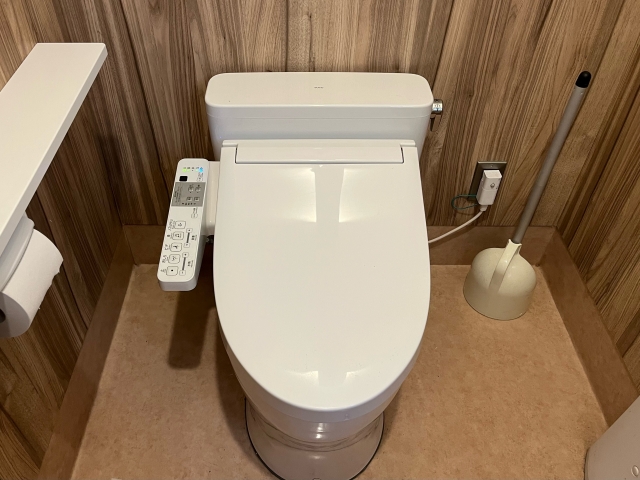
The first time most foreign visitors encounter a Japanese toilet, there’s a moment of panic. You sit down, accidentally brush something, and suddenly warm water is hitting you from an unexpected direction while a musical jingle plays. The control panel has 15 buttons, none of them obviously labeled “flush,” and the one you’re looking for might be on the wall, not the toilet.
This is completely normal. Japanese toilets — specifically the washlet-equipped kind found in almost every hotel, convenience store, and home in Japan — are legitimately confusing the first time. They’re also, once you understand them, one of the genuinely great small pleasures of traveling in Japan.
This guide explains every button, every function, and every situation you’ll encounter.
Two Types of Toilets You’ll Encounter
First, a quick orientation. Japan has two toilet types, and they’re at opposite ends of the spectrum.
Washlet toilets (ウォシュレット) are the high-tech ones: heated seat, bidet functions, dryer, sometimes sound effects and automatic lid opening. These are everywhere — hotels, convenience stores, department stores, most restaurants, most homes. They look like a regular Western toilet with a control panel attached to the side or mounted on the wall.
Squat toilets (和式, washiki) are the traditional style: a porcelain fixture set into the floor that you squat over. These are increasingly rare but still found in older train stations, some parks, older buildings, and rural areas. You face the hood (the raised end). Your legs go on either side of the fixture. They’re perfectly functional once you get the hang of them — just different.
In practice, most travelers encounter washlets 95% of the time. The squatters occasionally appear and cause brief confusion. Now you know.
The Control Panel: Every Button Explained
Washlet panels vary by manufacturer (TOTO and LIXIL/INAX are the two main brands) but the core functions are consistent. Here’s what you’ll encounter:
おしり (Oshiri) — Rear wash
The most-used function. A nozzle extends and sprays warm water at your backside. Pressure and position are usually adjustable. The word means “bottom” or “rear.”
ビデ (Bide) — Front wash / feminine wash
Same concept, different angle, aimed at the front. Symbol is usually a figure with water spraying upward.
強 / 弱 (Tsuyoi / Yowai) — Strong / Weak
Water pressure adjustment. 強 = stronger, 弱 = gentler. Often shown as + and − symbols or a sliding scale.
移動 (Idou) — Nozzle position
Moves the spray nozzle forward or back to find your preferred position.
乾燥 (Kansou) — Dryer
Warm air dryer. Works, but takes a while (around 30–60 seconds for adequate drying). Optional — toilet paper is always available.
音姫 (Otohime) — Sound princess / masking sound
Plays a flushing sound or running water to provide acoustic privacy. Originally invented because people were flushing repeatedly for the same purpose, wasting water. Press once to activate, press again (or wait) to stop. This is not the flush button.
脱臭 (Dasshu) — Deodorizer
Activated automatically on some models, manual on others. Pulls air through a filter.
便座 (Benza) — Seat temperature
Heated seat adjustment. Usually set to a comfortable level already.
水勢 (Suisei) — Water temperature
Adjusts the temperature of the wash water.
洗浄 / 大 / 小 (Senjou / Dai / Shou) — Flush
This is what you’re looking for. 大 (dai) = big flush (for solid waste). 小 (shou) = small flush (for liquid waste). Sometimes just 洗浄 (wash/flush). On some models the flush is a separate lever or button, not on the panel at all — check the side of the tank or the wall.
The STOP Button
Every panel has a 止 (tome) or STOP button. If something unexpected happens — wrong button, unexpected pressure, anything — press STOP. It’s usually red or distinctively colored, and pressing it immediately halts whatever is happening. Know where it is before you start exploring.
How to Actually Use It
The sequence is straightforward once you know it:
First, the seat is heated automatically — just sit down. The lid may open automatically on higher-end models when you approach.
Do your business normally. The toilet is just a toilet until you use the panel.
When ready to use the wash function, press おしり for rear wash or ビデ for front wash. Adjust pressure with 強/弱 if needed. The spray lasts until you press STOP or the function button again.
Use the dryer (乾燥) if you prefer, or just use toilet paper — both options are fine.
Press 大 to flush. Done.
Where to Find the Flush (The Most Common Confusion)
The flush button location varies by toilet model:
On the side control panel — labeled 大/小 or 洗浄
On the top of the tank — a physical button or lever
On the wall panel beside the toilet — touch-sensitive or physical
Automatic — the toilet flushes when you stand up (motion sensor)
If you genuinely can’t find it: stand up, wait a few seconds (automatic flush may trigger), then look on the top of the tank and the side wall. One of these three locations will have it.
Onsen and Public Bath Toilets
Toilets at onsen and public bathhouses follow the same washlet logic, but one note: some older facilities still have squat toilets. The same rules apply — face the hood, feet on either side, and don’t overthink it.
Etiquette and Practical Notes
Don’t flush toilet paper in Japan — wait, actually do. This is a common misconception. Modern Japanese plumbing is designed to handle toilet paper and you should flush it. The signs asking you not to flush things are about other items (wipes, sanitary products). Regular toilet paper: flush it.
The toilet paper goes in the toilet, not the bin. The small bin in the stall is for sanitary products and wipes — not regular toilet paper. This confuses travelers who’ve visited other Asian countries where plumbing can’t handle paper.
Some toilets have a small sink on top of the tank. Water from the tank refill runs through it so you can rinse your hands, then drains into the tank. It’s functional and saves space. Use it if you like, or use the separate sink.
Squat toilet technique: Face the hood (the higher, curved end). Feet shoulder-width apart on the tread surfaces. Squat low. Most people find holding onto the wall or door helps balance. Your clothing needs to be well out of the way. Flush by pressing the button or lever usually located at the top or side of the fixture.
Japanese Convenience Stores: The Complete Konbini Guide
Japanese Ryokan Guide: What to Expect, Onsen Etiquette & Kaiseki
FAQ: Japanese Toilets
Why do Japanese toilets have so many buttons?
The washlet was developed by TOTO in 1980 and has been refined ever since. Japanese bathroom culture places a high value on cleanliness and comfort, and the functions — heated seat, bidet wash, dryer, deodorizer — were added incrementally over decades. Most households have them now, so the complexity feels normal to Japanese users. For visitors, there’s a learning curve, but the core functions (rear wash, flush) are straightforward once labeled.
Where is the flush button on a Japanese toilet?
It varies. Check the side control panel for 大/小 or 洗浄, the top of the tank for a physical button or lever, or the wall panel beside the toilet. Some models flush automatically when you stand. If nothing works, stand up and wait — automatic flush may trigger within a few seconds.
What does おしり mean on a Japanese toilet?
おしり (oshiri) means “rear” or “bottom” in Japanese. It activates the rear bidet wash function — a nozzle extends and sprays warm water. The front wash function is labeled ビデ (bide). Both have adjustable pressure (強 = stronger, 弱 = gentler).
Is the sound button the flush?
No. 音姫 (Otohime, “sound princess”) plays a masking sound — usually a flushing noise or running water — for privacy. It was designed to stop people from flushing repeatedly just for the sound. The actual flush is 大 (big flush) or 小 (small flush), typically on the main panel or on the tank.
Do Japanese squat toilets flush?
Yes. The flush is usually a button or lever on the side or top of the fixture, or on the wall nearby. Some older ones have a pull-chain. For squatters, face the hood (the higher curved end), feet on the tread surfaces on either side, and flush when done.
Should I put toilet paper in the bin or flush it?
Flush it. Japanese plumbing is designed to handle toilet paper — this is different from many other Asian countries. The small bin in the stall is for sanitary products, wipes, and non-flushable items only. Regular toilet paper goes in the toilet.
What if I press the wrong button?
Press STOP (止). It’s usually red or distinctively colored and immediately halts whatever is happening. Every washlet has one. Finding it before you start experimenting is good practice.
Last updated: May 2026 | Toilet models and panel layouts vary by manufacturer and age of facility. Button labels and positions may differ from those shown.