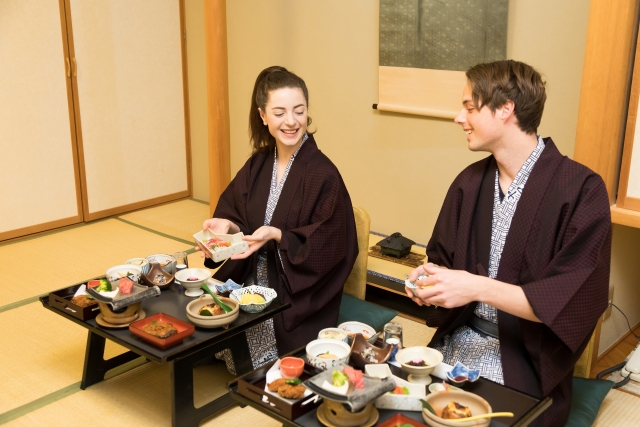
There’s a moment that happens to most first-time ryokan guests — usually about an hour after check-in, sitting in a yukata by the window watching the garden, tea cooling on the low table beside them — when they realize this is a completely different kind of travel experience. Not sightseeing. Not hotel-hopping. Something slower and more deliberate.
A ryokan (旅館) is a traditional Japanese inn, but that description undersells it. It’s an entire philosophy of hospitality, built around the idea that a guest’s comfort should be anticipated before it’s even requested. One night in a good ryokan tends to become the highlight of people’s Japan trips, often mentioned years later when they talk about the country.
This guide covers everything you need to know: what to expect when you arrive, how the onsen works, the kaiseki dinner, etiquette, costs, and how to find the right one for your trip.
What a Ryokan Actually Is
At its core, a ryokan offers tatami-floored rooms, futon bedding laid out each evening by staff, and a pace of life deliberately removed from the outside world. Most also have onsen (natural hot spring baths), and the majority of stays include a multi-course kaiseki dinner and traditional Japanese breakfast.
The spirit underlying all of this is omotenashi — Japanese hospitality at its most refined. It means anticipating needs before they’re voiced, paying attention to details most guests won’t consciously notice, and treating each stay as if it’s someone’s most important trip. It’s the opposite of efficient, transactional hotel service, and it takes some adjustment if you’re used to Western accommodation.
Ryokans exist across a wide spectrum. At one end are grand historic inns with private outdoor baths, Michelin-starred kaiseki chefs, and rates to match. At the other are small family-run places (minshuku) where the owner-cook serves whatever’s freshest from the local market. Both are worth experiencing; they just offer different things.
The Room
A traditional ryokan room centers on tatami — tightly woven rush grass mats that give the room its faint grassy scent and specific texture underfoot. You remove shoes at the entrance and are given slippers; you remove the slippers before stepping onto the tatami itself.
The room is typically spare. A low table, floor cushions, a tokonoma alcove with a scroll and flower arrangement, and not much else during the day. In the evening, staff come to clear the table and lay out your futon — a thick cotton mattress directly on the tatami, with bedding folded neatly on top. It’s more comfortable than it sounds.
You’ll be given a yukata — a light cotton robe — and are expected to wear it for dinner, wandering to the bath, and generally around the inn. Left side over right (right-over-left is for funerals). A sash ties loosely at the waist. In colder months there’s often a thicker outer robe too.
The Onsen
Most ryokans are built around natural hot spring water, and bathing is the centerpiece of the stay. Onsen water is geothermally heated and mineral-rich — the specific minerals vary by region and are thought to have different therapeutic properties, though the primary benefit for most guests is simply soaking in very hot water until everything stops hurting.
There are typically communal baths (often separate men’s and women’s), and some rooms have private baths attached. Higher-end rooms sometimes have rotenburo — outdoor baths, either private or communal, often set in natural scenery.
Onsen etiquette:
- Rinse thoroughly at the shower stations before entering the bath — this is mandatory, not optional
- Enter without a towel; the small towel is for washing, not bringing into the water
- No swimming, splashing, or loud conversation
- Tie back long hair so it doesn’t touch the water
- Don’t submerge your head
- Stay hydrated — the heat is intense, especially for first-timers; 10–15 minutes is enough initially
On tattoos: Many ryokans (and onsen facilities generally) still prohibit visible tattoos in communal baths. This is changing gradually, but check in advance if this applies to you. Ryokans with private baths are always an option if you’re concerned.
The ideal rhythm is to bathe in the evening after arriving, and again in the early morning before breakfast. Evening baths are deeply relaxing; morning baths, especially outdoor ones, have a particular quality as the air is cool and the water is hot.
Kaiseki Dinner
Kaiseki (懐石) is the formal multi-course cuisine that defines the ryokan dinner experience. A full kaiseki meal can run 10–15 courses, each small, each reflecting the season’s ingredients presented with careful attention to color, texture, and temperature.
A typical progression might include seasonal appetizers, clear soup, sashimi, a grilled dish, a simmered dish, a fried dish, rice with pickles and miso soup, and dessert — though the structure varies by chef and season. The beauty of kaiseki is that it tells a story about place and time: a winter meal in a mountain ryokan tastes completely different from a summer meal at a coastal inn.
Dinner is usually served in your room (at the low table, with staff bringing and clearing each course), though some ryokans have a communal dining room. Either way, there’s no rushing. A kaiseki meal takes 90 minutes to two hours, and that’s by design.
Breakfast the following morning is equally considered — a traditional Japanese spread of grilled fish, rice, miso soup, pickles, tamagoyaki (rolled egg), and seasonal side dishes. It’s a gentle way to ease into the day before checking out.
Dietary notes: If you have dietary restrictions, notify the ryokan well in advance — ideally at the time of booking. Most places can accommodate with enough notice, but kaiseki relies on seasonal availability and preparation can’t always be changed last-minute.
Costs and What’s Included
Ryokan pricing typically covers the room plus two meals (dinner and breakfast). This is the standard ippaku nishoku plan and represents the full experience. Room-only or breakfast-only options exist but miss the point somewhat.
| Type | Price per person | What to expect |
|---|---|---|
| Budget / minshuku | ¥8,000–15,000 | Simple tatami rooms, home-style meals, shared or basic onsen |
| Mid-range | ¥15,000–30,000 | Proper onsen facilities, good kaiseki, attentive service |
| High-end | ¥30,000–80,000+ | Private baths, premium seasonal kaiseki, full omotenashi service |
Prices are per person, based on two sharing. Solo travelers often pay a supplement. Note that service charges and consumption tax are typically added on top of quoted rates.
How to Find and Book a Ryokan
For English-friendly booking, Booking.com and Expedia list many ryokans, though the inventory and filters are better on Japan-specific platforms. Jalan and Rakuten Travel have the widest selection but are primarily in Japanese. Japanican (operated by JTB) has solid English support and focuses on traditional accommodation.
Book early. Popular ryokans during cherry blossom season (late March–early April) and autumn foliage (late October–mid November) sell out months in advance. Major holiday periods (Golden Week in early May, Obon in mid-August, New Year’s) are similarly packed.
Best ryokan regions: Hakone (hot springs, Mt. Fuji views, accessible from Tokyo), Kyoto (historic inn culture, close to temples and gardens), Kinosaki Onsen (classic onsen town in Hyogo), Nikko (mountain setting, Tochigi), Beppu and Yufuin (Kyushu, famous onsen towns). The Tohoku region has excellent, less-touristed options.
Practical Tips
Check-in times: Usually 3–4pm. Check-out is typically 10–11am. This is tighter than hotels because staff need time to prepare the room and arrange meals. Don’t arrive early expecting to check in immediately.
Dinner timing: Kaiseki dinner is usually served at a set time — often 6pm or 7pm — and is booked when you check in. Don’t miss it or plan other activities that run into the evening.
What to bring: Most ryokans provide everything: yukata, toiletries, towels. Pack light. Bring socks if you prefer them to the provided slippers.
Wi-Fi: Available at most mid-range and higher ryokans, though signal can be weaker in rural mountain locations.
Tipping: Not done in Japan. Don’t tip staff.
Cash: Some older or rural ryokans are cash-only. Check in advance and bring yen.
Apple Picking in Hirosaki: Japan’s Best Orchard Experience
Wanko Soba in Hanamaki: The Noodle Challenge Most Tourists Miss
FAQ: Japanese Ryokan
What is a ryokan?
A ryokan is a traditional Japanese inn characterized by tatami rooms, futon bedding, onsen bathing, and meals (usually kaiseki dinner and Japanese breakfast) included in the stay. They range from small family-run inns to grand resort properties, but all share the underlying philosophy of omotenashi — anticipatory, attentive hospitality.
Do I have to eat the kaiseki dinner?
Most standard ryokan bookings include dinner and breakfast (ippaku nishoku). If you’d prefer room-only or want to eat out, ask when booking — some ryokans offer this, though it may not be available everywhere. The kaiseki is genuinely worth experiencing; skipping it is missing a large part of what makes the stay special.
What happens in a Japanese onsen?
You wash thoroughly at a shower station before entering the communal bath. No swimwear — onsen are used without clothing in Japan. You soak in the geothermally heated mineral water at your own pace. Communal baths are usually separated by gender; private baths are sometimes available in higher-grade rooms. Tattoos may restrict access to communal baths at some properties.
How much does a ryokan cost?
Budget minshuku-style ryokans start around ¥8,000–15,000 per person including meals. Mid-range is ¥15,000–30,000. High-end with private baths and premium kaiseki runs ¥30,000–80,000+. Prices are per person based on double occupancy and typically include two meals. Solo supplements apply at many properties.
What should I wear at a ryokan?
The yukata (light cotton robe) provided by the inn is appropriate for dinner, going to the onsen, and moving around the property. You don’t need to bring special clothing. Wear the yukata left-side-over-right (right-over-left is the funeral convention). Slippers are provided; remove them before stepping on tatami.
Is a ryokan suitable for first-time Japan visitors?
Yes — and often it’s a highlight. Staff at mid-range and higher ryokans are accustomed to international guests and many speak basic English. The experience is guided: meals are served, the yukata is provided, bathing is explained. The main adjustment is the pace (slower) and sleeping on a futon (different but comfortable).
When should I book a ryokan?
For peak seasons — cherry blossom (late March–April), autumn foliage (October–November), Golden Week (late April–early May), and New Year’s — book several months in advance. Popular individual ryokans at any time of year can fill up weeks ahead. Midweek stays in off-peak seasons are easier to book last-minute.
Last updated: May 2026 | Ryokan prices and availability vary. Policies on tattoos, dietary restrictions, and booking options differ between properties — confirm directly before reserving.