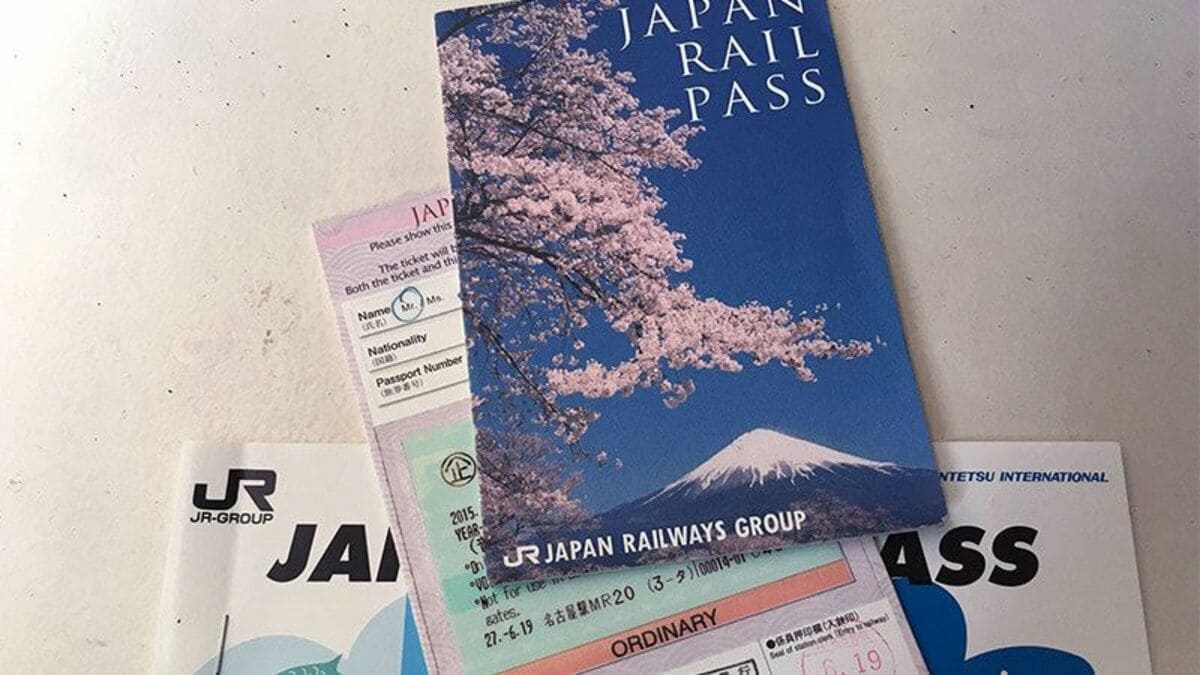
The first time I stood at a JR ticket office trying to figure out whether to buy the JR Pass, I did what most travelers do: I Googled “is JR Pass worth it” and got twelve different answers. The truth is, the right answer completely depends on where you’re going—and since October 2023, the math has changed significantly.
I’ll give you a straightforward breakdown: the prices, exactly what’s covered, and the honest calculation for the most common Japan itineraries. No fluff. Just the numbers you need to decide.
What Is the Japan Rail Pass?
The Japan Rail Pass (officially ジャパンレールパス) is an unlimited rail pass available exclusively to foreign tourists visiting Japan on a “Temporary Visitor” visa. It covers most JR trains nationwide—including Shinkansen bullet trains—for a fixed consecutive period of 7, 14, or 21 days.
One crucial rule: you must purchase it before arriving in Japan. Buying in Japan is possible at select airports and stations, but costs 10–20% more. There’s also an important exception to the unlimited travel promise (more on that below).
2026 Prices
| Duration | Ordinary (Adult) | Ordinary (Child 6–11) | Green Car (Adult) |
|---|---|---|---|
| 7 days | ¥50,000 | ¥25,000 | ¥70,000 |
| 14 days | ¥80,000 | ¥40,000 | ¥110,000 |
| 21 days | ¥100,000 | ¥50,000 | ¥140,000 |
These prices represent a roughly 70% increase from the pre-2023 rate of ¥29,650 for 7 days.
⚠️ Price increase alert (October 2026): JR has announced that from October 1, 2026, passes sold through overseas travel agents and platforms like Klook will rise by approximately 5–6% (7-day Ordinary to ¥53,000). The official JR site (japanrailpass.net) is holding prices for now. If you’re traveling after October, book directly through the official site to lock in the current rate.
Key Restriction: No Nozomi or Mizuho
The base pass does not cover the Nozomi (fastest Tokaido/Sanyo Shinkansen) or Mizuho trains. You’ll need to take the Hikari or Sakura instead—which are only about 15–30 minutes slower and are fully covered. You can board Nozomi trains by purchasing a ¥4,000–5,000 supplement, but that largely defeats the purpose of the pass.
Is the JR Pass Worth It in 2026?
At ¥50,000 for 7 days, the pass requires significant multi-city travel to justify the cost. Here are three real itinerary examples:
Example 1: Classic Golden Route (Borderline)
Tokyo → Kyoto → Osaka → Hiroshima → Tokyo (Hikari/Sakura): approx. ¥42,830. Add Narita Express round trip (¥6,140), local JR trains in Tokyo (¥2,000), and a day trip: total reaches roughly ¥51,000+. Verdict: Barely worth it financially—but the convenience factor adds real value.
Example 2: Tokyo–Kyoto Round Trip Only (Not Worth It)
Tokyo → Kyoto → Tokyo (Hikari): ¥27,940. Add Narita Express round trip (¥6,140) and local JR travel (¥2,000): total around ¥36,000. Verdict: Buying individual tickets saves you roughly ¥14,000 over the 7-day pass.
Example 3: Extended Multi-City (Worth It)
Tokyo → Kyoto → Osaka → Hiroshima → Fukuoka → Tokyo, plus day trips to Nikko and Kamakura and airport access: individual tickets exceed ¥65,000. Verdict: Pass saves ¥15,000+ and eliminates all ticketing stress.
Quick Decision Guide
Buy the JR Pass if: you’re visiting 3+ cities connected by Shinkansen, taking multiple long-distance journeys within 7 days, or want the freedom to hop on any train without buying tickets each time.
Skip the JR Pass if: you’re staying mostly in one city, only making one round-trip Shinkansen journey, flying between destinations, or most of your daily travel uses Tokyo Metro, Osaka Metro, or private railways (which the pass doesn’t cover).
What the JR Pass Covers
Covered: All JR Shinkansen except Nozomi/Mizuho (Hikari, Kodama, Sakura, Hayabusa, Kagayaki, and more), all JR local and express trains nationwide (including the Yamanote Line loop in Tokyo), the Narita Express (N’EX) to/from Tokyo airport, the Haruka express to Kansai airports, and the JR Miyajima Ferry in Hiroshima.
Not covered: Nozomi and Mizuho Shinkansen (without supplement), Tokyo Metro, Toei Subway, Osaka Metro, Keikyu, Odakyu, Kintetsu and all other private railways, Green Car upgrades if you hold an Ordinary pass, and Gran Class (luxury tier).
A simple rule of thumb: if the train or service has “JR” in its name and isn’t the Nozomi or Mizuho, you can almost certainly use your pass.
For airport access, the JR Pass covers the Narita Express from Narita Airport—a ¥3,070 single fare that adds up quickly. If you’re flying into Narita, this alone covers a meaningful chunk of the pass value. For more on Tokyo airport transport options, see our full guide: Tokyo Station to Narita Airport: All Your Transport Options.
How to Buy and Activate Your JR Pass
Buying Before You Arrive (Always Cheaper)
- Choose your duration (7/14/21 days) and class (Ordinary/Green Car)
- Purchase from the official JR Pass site or an authorized seller like Klook
- You’ll receive an Exchange Order—a voucher, not the actual pass yet
- The Exchange Order is valid for 3 months from issue date
Activating Your Pass in Japan
Take your Exchange Order and passport (with Temporary Visitor stamp) to any JR Ticket Office (look for the green 緑の窓口 / Midori no Madoguchi sign). These are located at major stations and all international airports. Staff will print your actual JR Pass card with validity dates.
Strategic tip: You don’t need to activate immediately on arrival. If you’re spending your first two or three days sightseeing in Tokyo without taking any long-distance trains, hold off on activating. You can choose any start date within one month of exchange—so activate it the morning you head to Kyoto or Osaka.
Using the Pass Day-to-Day
At ticket gates, use the staffed (manned) lane and show your pass—staff will wave you through. Automatic IC card gates won’t accept it. For Shinkansen, reserve seats for free at any JR Ticket Office: show your pass, state your destination and preferred time, and collect your reservation ticket. Reserved seats are technically optional (non-reserved cars exist on most Shinkansen), but during Golden Week, Obon, or New Year, trains fill up fast—reserve everything in advance.
Mistakes to Avoid
Activating too early. Don’t activate on arrival day if you’re not traveling far yet. Every day counts.
Trying to board the Nozomi. Check the train name before boarding. Hikari takes only 15–30 minutes longer and is fully covered.
Forgetting to reserve seats. Free with the pass, but not automatic—you need to visit a ticket office or use the JR Pass online reservation service.
Assuming it works on subways. Pick up a Suica or Pasmo IC card at any major station for Tokyo Metro, Osaka Metro, and buses. The JR Pass covers JR lines only.
Losing the pass. No replacement is issued under any circumstances. Keep it in your wallet and take a photo as backup.
Buying based on “everyone says to.” Run the numbers for your specific itinerary. Use the Hyperdia or Google Maps transit function to add up individual ticket costs before committing.
Recommended Articles↓↓
- Tokyo Station to Narita Airport: Narita Express, Buses and More
- One Perfect Day in Kumamoto
- Apple Picking in Hirosaki: A Tohoku Day Trip Worth Making
FAQ: Japan Rail Pass 2026
Is the JR Pass worth it after the 2023 price increase?
It depends entirely on your itinerary. At ¥50,000 for 7 days, a simple Tokyo–Kyoto round trip (around ¥27,940 individual) no longer justifies the pass. But multi-city routes covering Tokyo, Kyoto, Hiroshima, and Fukuoka with day trips and airport access can easily exceed ¥65,000 in individual tickets, making the pass genuinely valuable. Always calculate your specific routes before buying.
Are JR Pass prices going up in 2026?
From October 1, 2026, overseas travel agents and platforms including Klook will raise the 7-day Ordinary pass price to around ¥53,000. The official JR Pass site (japanrailpass.net) is maintaining current pricing for now. If your trip starts after October 2026, check the official site first for the best rate.
Can I use the JR Pass on Nozomi trains?
Not with the base pass. Nozomi (and Mizuho) trains require a separate supplement of around ¥4,000–5,000. The Hikari Shinkansen covers the same routes and is only about 15–30 minutes slower—use that instead.
Where do I buy the JR Pass?
Before arriving in Japan, purchase through the official JR Pass website or an authorized seller like Klook. You’ll receive an Exchange Order valid for 3 months. In Japan, passes are sold at major airports and stations at a 10–20% markup. Pre-purchase is always the better option.
How do I activate my JR Pass?
Bring your Exchange Order and passport (with Temporary Visitor stamp) to any JR Ticket Office. Staff will print your actual pass. You can choose any activation start date within one month—don’t activate until the day you start making long journeys.
Does the JR Pass cover Tokyo subways?
No. The pass only covers JR-operated lines, including the Yamanote Line loop. Tokyo Metro, Toei Subway, Osaka Metro, and all private railways require separate payment. A Suica or Pasmo IC card handles all of these easily.
Is the Green Car upgrade worth it?
For most travelers, no. Ordinary class on Shinkansen is comfortable, with reclining seats, power outlets, and decent legroom. Green Car offers slightly more space and quieter surroundings but costs an extra ¥20,000 for 7 days. It makes sense if you’re doing very long journeys (5+ hours) or traveling during peak crowding periods like Golden Week.
What happens if I lose my JR Pass?
No replacement is available under any circumstances. A lost pass means buying individual tickets for the rest of your trip. Keep it secure and photograph the front for your records.
Last updated: May 2026. JR Pass prices listed are Ordinary class for adult travelers. Prices correct as of publication; the ¥53,000 agency price applies from October 1, 2026 through certain sales channels. Always confirm current prices at japanrailpass.net before purchasing.