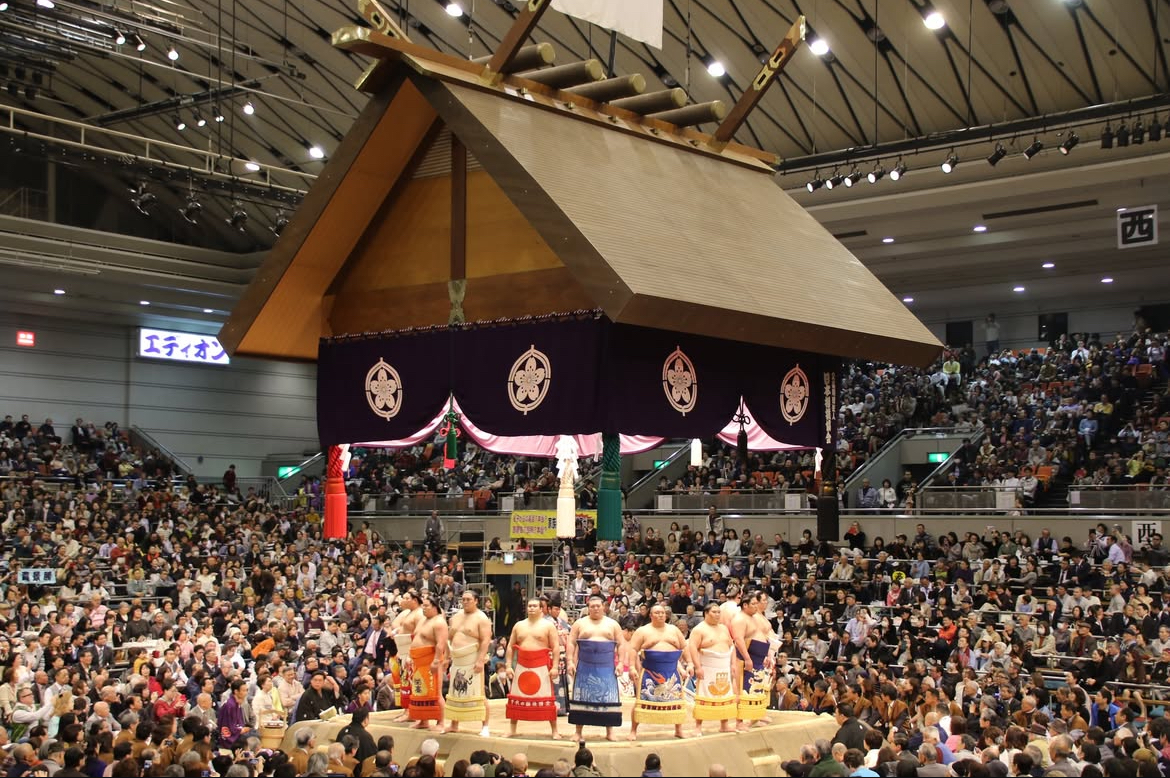
If you’ve ever watched two enormous men collide in a ring, sending salt flying and the crowd into silence before an eruption of cheers — that’s sumo. And if you haven’t seen it yet, you’re missing one of Japan’s most mesmerizing experiences.
Sumo wrestling (相撲, sumō) has been at the heart of Japanese culture for over a thousand years. It started as a Shinto ritual to entertain the gods and ensure good harvests. Today, it’s a nationally beloved spectator sport that draws packed crowds to tournaments six times a year. For foreign visitors, it’s also one of the most accessible windows into traditional Japan — no Japanese required to enjoy it.
This guide covers everything you need to know: how sumo works, when and where to watch, how to get tickets, what to eat, and how to experience it even if you’re not in Japan during tournament season.
What Is Sumo? The Basics
The rules are deceptively simple. Two wrestlers (rikishi) face off inside a circular clay ring called a dohyō. The first to touch the ground with anything other than the soles of their feet — or step outside the ring — loses. Most bouts last only seconds.
But don’t let the simplicity fool you. There are 82 recognized winning techniques (kimarite), from powerful frontal pushes to precise throws and trips. And the buildup before each bout — the stomping, the salt-throwing, the stare-downs — can take several minutes and is just as captivating as the match itself.
A few things are off-limits: kicking, punching, hair-pulling, and grabbing below the waist. Everything else is fair game within the ring.
The ranking system is elaborate, with ten levels from beginner to yokozuna (grand champion) — the highest and most revered rank in all of sumo. Only a handful of wrestlers in history have ever reached it.
The Ritual Side of Sumo
What sets sumo apart from other combat sports is how steeped it is in Shinto tradition. Even today, every tournament is packed with ritual.
Before bouts begin, wrestlers perform the dohyō-iri (ring-entering ceremony), dressed in embroidered silk aprons called kesho-mawashi. The yokozuna‘s ceremony is especially dramatic — worth arriving early to see.
During bouts, wrestlers toss salt to purify the ring, stomp their feet to drive away evil spirits, and clap their hands to show they carry no weapons. These aren’t theatrical add-ons. They’re centuries-old Shinto rites performed exactly as they were in the Edo period.
The referee (gyōji) wears elaborate Heian-period court costume. Judges in formal kimono sit ringside. Everything about sumo signals that you’re watching something ancient and deeply serious — which makes the explosive five-second bouts even more satisfying.
When and Where to Watch Sumo in Japan
There are six grand tournaments (honbasho) per year, each lasting 15 days:
| Month | Location | Venue |
|---|---|---|
| January | Tokyo | Ryogoku Kokugikan |
| March | Osaka | Osaka Prefectural Gymnasium |
| May | Tokyo | Ryogoku Kokugikan |
| July | Nagoya | Dolphins Arena |
| September | Tokyo | Ryogoku Kokugikan |
| November | Fukuoka | Fukuoka Convention Center |
Tokyo’s Ryogoku Kokugikan is the spiritual home of sumo. The surrounding Ryogoku neighborhood is lined with sumo stables, chanko nabe restaurants, and sumo-themed everything. Even outside tournament season, it’s worth visiting.
Doors open around 8am with lower-ranked bouts, but the crowd builds through the afternoon. The main event bouts for top-ranked wrestlers typically run from around 4–6pm. Most visitors arrive in the early afternoon to catch a few hours of action without sitting through the full day.
How to Get Sumo Tickets
Book early. Premium seats for Tokyo tournaments sell out fast, sometimes months in advance. Arena seats (western-style chairs in the upper tiers) are easier to find but still go quickly for popular days.
Seat types:
- Box seats (masu-seki): Traditional tatami-style floor boxes for 2–4 people. Close to the ring, highly atmospheric. You sit on cushions — not ideal for those with bad knees. Sold per box, not per person, so they’re pricey if you’re solo.
- Arena seats (isu-seki): Regular stadium chairs in the upper level. Comfortable, cheaper, and still give a great view of the ring.
- Ringside seats (tamari-seki): Floor-level cushions right next to the ring. Exciting, but wrestlers occasionally fly into the crowd. Not available to individual tourists — these go to sumo association members.
Where to buy:
- Official Japan Sumo Association website (tickets released about two months before each tournament)
- Convenience stores (Lawson ticket machines — requires some Japanese)
- Day-of tickets are sometimes available at the venue from 8am
What to Expect on the Day
Arrive earlier than you think you need to. The atmosphere builds gradually, and seeing a few lower-ranked bouts gives you a feel for the sport before the big names come out.
Food and drinks are available inside the venue — bento boxes, yakitori, beer. If you have box seats, eating in your box is perfectly fine and very much part of the experience. Avoid bringing food or drink onto the tatami mats themselves.
Photography is allowed and encouraged. Just don’t use flash during the pre-bout rituals, and be mindful of the people around you.
Cheering etiquette is relaxed — the crowd roars when a bout ends, chants wrestlers’ names, and occasionally throws cushions (officially frowned upon, but it happens after an upset). You can join in.
Chanko Nabe: The Sumo Wrestler’s Diet
Every sumo stable runs on chanko nabe — a rich, protein-loaded hot pot made with chicken, fish, tofu, vegetables, and whatever else the stable cook decides to throw in. Wrestlers eat enormous quantities of it to build and maintain their size.
After retiring from competition, many former wrestlers open chanko nabe restaurants. Ryogoku has a high concentration of them. Eating chanko in Ryogoku after watching a tournament is one of those genuinely memorable Japan experiences.
What you’ll get: a simmering pot at the table, packed with ingredients, served with rice and sometimes sake. It’s hearty, warming, and nothing like what you’d eat back home.
Sumo Experiences for Tourists
Not in Japan during a tournament? There are good alternatives.
Morning practice visits: Sumo stables begin training early — sometimes from 6am — and some allow small groups of visitors to observe. You’ll watch wrestlers drill techniques on the same clay ring where they live and train. It’s more intimate than a tournament, and often more revealing about what sumo actually is.
Casual walk-in visits aren’t possible, but several tour operators have stable partnerships. The experience typically lasts 90 minutes to 2 hours and includes an English-speaking guide. Morning practice season typically runs February through April, though this varies.
Asakusa Sumo Experience: For visitors who want the full package — live sumo watching, a sukiyaki bento and chanko nabe, and the chance to meet and take photos with actual wrestlers — this tour covers it all in one afternoon. It’s based in Asakusa and runs year-round.
👉 Book the Asakusa Sumo Experience here
Sumo Etiquette: Quick Tips
- Stay quiet during the pre-bout rituals — save the cheering for after the action
- No flash photography during ceremonies
- If you’re in box seats, keep food and drink off the tatami mats
- Don’t touch wrestlers without asking — if you’re lucky enough to meet one, ask first
- Cushions are for sitting, not throwing (officially)
Japanese Alcohol Guide: Sake, Shochu and More
Convenience Store Onigiri: Your Complete Guide
FAQ: Sumo Wrestling in Japan
What is sumo wrestling?
Sumo is Japan’s national sport — a full-contact wrestling discipline where two competitors try to force each other out of a clay ring or make any part of their opponent’s body (other than the soles of their feet) touch the ground. It’s deeply rooted in Shinto ritual and has been practiced for over a thousand years.
When can I watch sumo in Japan?
There are six grand tournaments per year: January, March, May, July, September, and November, held in Tokyo (three times), Osaka, Nagoya, and Fukuoka. Each tournament runs for 15 days, so there’s a reasonable window to catch one if your travel dates align with odd months.
How do I get sumo tickets?
Through the Japan Sumo Association’s official website, Lawson convenience store ticket machines, or at the venue on the day. Box seats and popular days sell out well in advance — book as early as possible, especially for Tokyo tournaments.
What’s the best seat at a sumo tournament?
Box seats offer the most atmospheric experience, sitting close to the ring in traditional tatami-style spaces. Arena seats (stadium chairs in the upper level) are more comfortable and cheaper. Ringside seats are reserved for sumo association members and not available to general visitors.
What should I wear to a sumo tournament?
There’s no dress code. Comfortable clothes and shoes you can slip off easily (in case you have box seats) are all you need. Some people dress up; most don’t.
What is chanko nabe?
The traditional diet of sumo wrestlers — a hearty hot pot loaded with protein: chicken, fish, tofu, vegetables, and whatever else is in season. Many former wrestlers open chanko restaurants after retiring. Ryogoku in Tokyo is the best place to try it.
Can I watch sumo practice?
Yes, through organized tours with stable partnerships. You can observe morning training sessions up close, usually with an English-speaking guide. Casual drop-ins without a booking are generally not permitted.
Are there sumo experiences for tourists in Tokyo?
Yes. Morning practice tours run at various stables, mostly from February to April. The Asakusa Sumo Experience runs year-round and combines live sumo, Japanese food, and wrestler interaction in one tour.
Last updated: May 2026 | Affiliate disclosure: This article contains Klook affiliate links. If you book through them, we may earn a small commission at no extra cost to you. All opinions are our own.