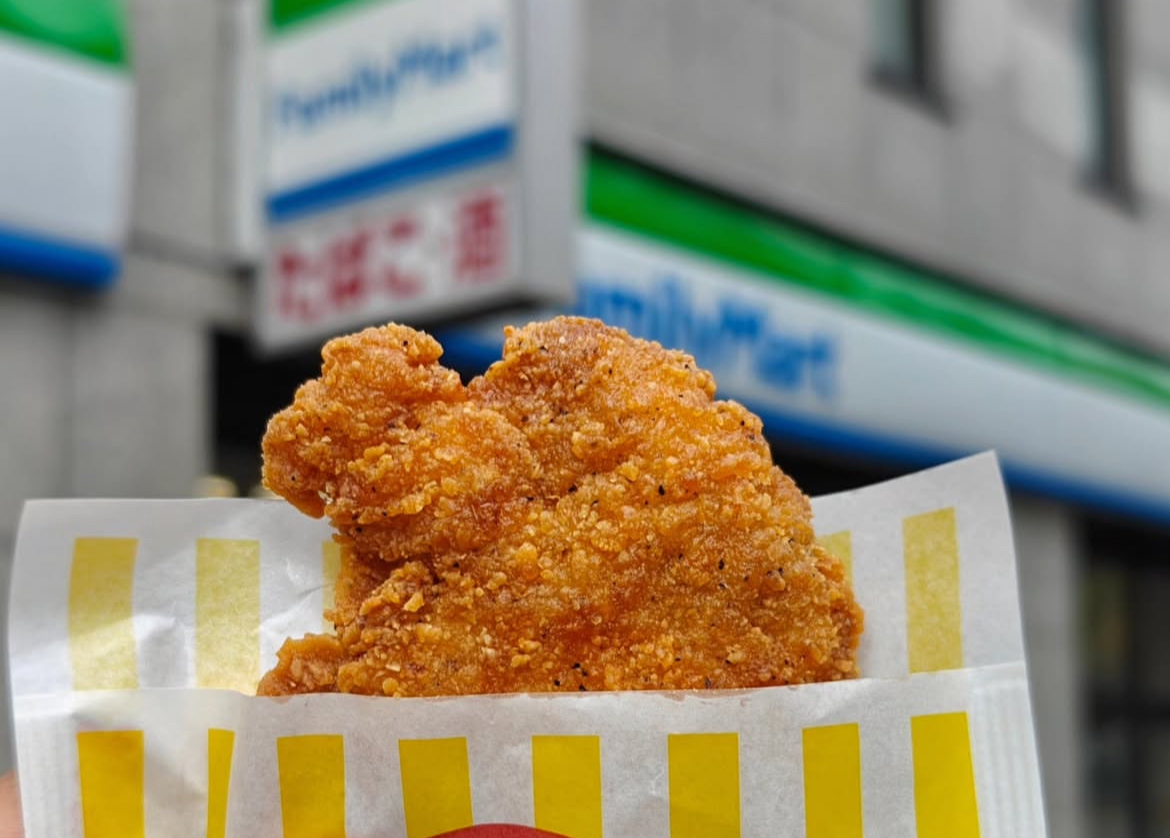
Walking through Tokyo late at night, I ducked into a Family Mart for water and caught the unmistakable aroma of fresh fried chicken. That’s how most people discover FamiChiki—Family Mart’s signature fried chicken that’s become an unexpected icon of Japanese convenience store culture.
This isn’t fancy food. It’s a piece of fried chicken from a convenience store that costs ¥200 (about $1.30 USD). But somehow it’s become something both tourists and locals genuinely love. Here’s why this simple convenience store staple deserves your attention, and why you should absolutely try it during your trip.
What Exactly is FamiChiki?
The Simple Truth
FamiChiki is Family Mart’s signature fried chicken, perfected since its 2006 launch. It’s a single piece of chicken thigh coated in crispy, peppery breading and fried fresh in small batches throughout the day. At ¥200–250, it’s become one of Japan’s most beloved convenience store foods.
The breading is thin and genuinely crispy—not thick like KFC. The seasoning is peppery and savory with a slight sweetness underneath, and the chicken inside is surprisingly juicy. Most importantly, it’s served hot. Careful-with-that-first-bite hot. The temperature is part of the appeal.
How does it compare to Western fried chicken? It’s lighter and less greasy, with more focus on pepper and seasoning than thick breading. It’s not trying to be KFC—it’s its own thing. If you let it be what it is (Japanese convenience store fried chicken done really well), you’ll get it immediately.
From Launch to Legend
FamiChiki launched in 2006 and immediately became a massive hit, selling hundreds of millions of pieces per year. The success sparked what’s now called the “konbini chicken wars”—Lawson responded with L-Chiki, 7-Eleven created Nanachiki, and every chain wanted a piece of the action.
What makes FamiChiki still stand out is consistency. You can get it in Tokyo, Osaka, Hokkaido, or Okinawa and it tastes the same everywhere. That reliability matters when you’re traveling. It’s eaten by everyone from university students to salarymen, and it’s become embedded in Japanese casual food culture in a way that’s hard to overstate.
How to Order FamiChiki
Finding Your Family Mart
Family Mart is everywhere—the blue, white, and green logo is unmistakable. In Tokyo alone there are hundreds of locations, and most are open 24/7. Walk five minutes in any direction in a Japanese city and you’ll probably pass one.
The Ordering Process
- Walk in and look for the hot food counter near the register (usually in a glass case)
- Say “FamiChiki kudasai” (ファミチキください) or simply point at the chicken
- The staff will grab your chicken, wrap it in paper, and ring you up
- Pay with cash, credit card, or IC card like Suica
The whole transaction takes about 30 seconds. If it’s not ready immediately, they’ll hold up fingers indicating the wait time—usually 3–5 minutes. They’ll hand you FamiChiki in a paper wrapper; grab extra napkins from the dispenser nearby because this gets messy.
Variations and Pairings
Variations you might encounter: Spicy FamiChiki (extra kick when available) and seasonal limited editions like teriyaki or cheese that come and go throughout the year.
For pairings, the classic combo is onigiri + FamiChiki + green tea for under ¥500. If you want an actual meal, two onigiri + FamiChiki + salad + drink comes in around ¥800. And for the full local experience: Strong Zero canned cocktail + FamiChiki late at night is exactly what people around you will be doing.
Even with zero Japanese ability, you’ll manage this. The staff are used to tourists, and pointing works universally.
When and Why to Eat FamiChiki
Perfect Occasions
Quick lunch on the go: Portable and satisfying when you’re sightseeing and don’t want to sit down for a full meal.
Late-night snack: Everything’s closed except konbini—warm FamiChiki at 1 AM hits different. This is genuinely one of the quintessential Japan experiences.
Budget-friendly meal: At ¥200, combine it with an onigiri (¥120) and a drink (¥150) for a solid meal under ¥500—that’s about $3.30 USD.
Any time hunger strikes: This is the real answer. There’s no wrong time for FamiChiki.
Understanding the Context
Here’s what surprises Western visitors: convenience store food isn’t looked down upon in Japan. It’s not considered “low quality”—Japanese konbini maintain high standards, and salary workers, students, and families all eat konbini food regularly. FamiChiki has achieved near-cultural-icon status, with social media accounts and celebrity endorsements dedicated to it.
When you’re eating fried chicken from a paper wrapper outside Family Mart, you’re not doing anything weird or touristy—you’re doing exactly what locals do. The “fast but quality” concept is very Japanese, and FamiChiki embodies that philosophy perfectly.
Timing Your Purchase
Best times for fresh batches are the morning rush (7–9 AM), lunch (11 AM–1 PM), and early evening (5–7 PM)—demand is highest then, so they’re frying constantly. Very late at night (3–5 AM) the chicken may have been sitting a while if the store hasn’t been busy. If you don’t mind a short wait, just gesture at the fryer and say “hot?” or “fresh?”—they’ll fry a new batch. This is completely normal and acceptable.
FamiChiki vs. The Competition
The Main Contenders
Lawson’s L-Chiki: Lighter breading, slightly different seasoning, more delicate texture. Many people actually prefer this—it’s genuinely good and gives FamiChiki a real run for its money.
7-Eleven’s Nanachiki: Softer texture overall, less crispy breading, milder flavor profile. Fine, but most people rank it third.
Ministop’s chicken: Less famous and less common, but decent if you happen to find one.
The Honest Comparison
FamiChiki’s crispy-to-juicy ratio and peppery seasoning make it stand out. If you don’t like heavy breading, L-Chiki is the move. If you prefer something softer and milder, try Nanachiki. Price-wise they’re all similar at ¥200–250.
Try FamiChiki first—it’s the most iconic and sets the standard. But they’re all worth trying. You’re in Japan, and there’s a Family Mart, Lawson, and 7-Eleven on most blocks. Doing your own taste test is genuinely part of the experience.
Beyond the Chicken: Why Konbini Culture Matters
Convenience stores in Japan are a cultural institution. Over 55,000 konbini exist across the country—roughly one for every 2,300 people. They’re cleaner than Western convenience stores, the food is better, and they’re genuinely essential to how daily life functions.
FamiChiki is part of a larger culture where convenience doesn’t mean sacrificing quality. That’s what makes it noteworthy—it’s not just cheap fried food, it’s part of a system that prioritizes quality even at the lowest price points.
While you’re at the hot food counter, look at what else Family Mart has on offer: karaage (smaller pieces, different marinade), nikuman (steamed pork buns, especially good in winter), oden in cold months (various ingredients simmered in dashi broth—just point at what looks good), yakitori skewers, and croquettes. FamiChiki is the gateway to konbini hot food. Once you try it, you start exploring everything else. That’s when you realize you’ve fallen into the konbini rabbit hole.
Eating FamiChiki also teaches you something about Japan: good food doesn’t have to be expensive or formal. There’s no pretension. When you see a salaryman in a suit eating onigiri from 7-Eleven at the train station, or students sharing FamiChiki outside Lawson at midnight, you’re seeing real Japan—not tourist Japan.
Practical Tips
- Grab extra napkins — the crispy breading sheds, and it gets messier than you expect
- Let it cool for a minute — fresh FamiChiki is genuinely hot; burn-your-mouth hot
- Eat it within 10–15 minutes — the crispiness fades as it cools
- Taking photos is completely normal — nobody will judge you for photographing your FamiChiki
- Budget note: At ¥200–250, you could eat breakfast, lunch, and snacks from Family Mart for under ¥1,500 a day (~$10 USD). No tipping, no service charge — ¥220 means ¥220
- FamiChiki sells approximately 180–200 million pieces per year — this isn’t a niche thing
Final Thoughts
FamiChiki represents something bigger than convenience store fried chicken. It’s about how good food in Japan isn’t gatekept behind expensive restaurants. It’s about finding comfort food in a foreign country, and discovering joy in simple things.
Is it health food? No. Does it matter? Not really. You’re traveling. Life’s short. Eat the fried chicken.
There’s something genuinely delightful about walking into a brightly lit Family Mart at midnight, ordering FamiChiki with broken Japanese or just pointing, paying ¥220, and walking out with this hot, crispy piece of chicken. It’s unpretentious, satisfying, and quintessentially Japanese in execution—taking something simple and doing it really well.
Years later, you’ll remember temples and scenery and big moments. But you’ll also remember FamiChiki—that first bite, probably standing outside because you couldn’t wait. How surprisingly good it was. That’s the power of simple, accessible, good food. Try it. You’ll get it.
Common Questions About FamiChiki
What is FamiChiki?
FamiChiki is Family Mart’s signature fried chicken—a single piece of chicken thigh with crispy, peppery breading sold for around ¥200–250. It’s been their flagship hot food item since 2006 and has become iconic as quintessential convenience store food done right.
How much does FamiChiki cost?
Around ¥200–250 (approximately $1.30–1.65 USD) depending on location. No hidden charges, no service fees. What you see on the menu board is what you pay.
How do I order FamiChiki if I don’t speak Japanese?
Walk up to the register, point at the chicken in the hot food case, and say “this one, please” or just point and nod. The staff are completely used to this. Alternatively, say “FamiChiki kudasai” (ファミチキください). Both methods work perfectly. Payment is straightforward—they show you the amount, you pay with cash or card.
Is FamiChiki available at all Family Mart stores?
Yes, basically all Family Mart locations throughout Japan carry FamiChiki. It’s their signature item, available everywhere from Tokyo to Hokkaido to Okinawa. Very late at night they might have sold out, but during normal hours you’ll always find it.
What does FamiChiki taste like?
Crispy exterior with peppery, savory seasoning and juicy chicken inside. Lighter than American-style fried chicken—less greasy, thinner breading, more focus on the seasoning. Not spicy, just well-flavored. Best eaten fresh within 10–15 minutes of purchase while it’s still hot and crispy.
Is FamiChiki better than other convenience store chicken?
This is genuinely debated. FamiChiki tends to win for texture and consistency. Lawson’s L-Chiki is lighter and has its fans. 7-Eleven’s Nanachiki is softer and milder. Most people say FamiChiki or L-Chiki, with personal preference determining the winner. Start with FamiChiki since it’s the most iconic, then branch out and do your own comparison.
Recommended Articles↓↓
・What Makes Japan’s Convenience Stores Amazing? FamiChiki, Bill Payment & More
・Tokyo Day Trip Guide: Budget-Friendly Itineraries for ¥5,000, ¥10,000, and ¥20,000
・Ultimate Guide: Where to Buy Pokémon Cards in Japan (2025)
Last updated: 2025. Prices may vary slightly by location. FamiChiki availability and seasonal flavors subject to change.