Quick answer: Bow once at the torii gate, walk to the side of the main path, rinse your hands at the water basin, then pray. At a shrine: two bows, two claps, one bow. At a temple: palms together and a quiet bow, no clapping. Keep your voice down, check photo signs, and don’t open an omamori charm.
Shrine or Temple? How to Tell
| Shinto shrine (神社, jinja) | Buddhist temple (寺, tera) | |
|---|---|---|
| Entrance | Torii gate (often red or wooden) | Large gate with roof (山門, sanmon) |
| How to pray | 2 bows, 2 claps, 1 bow | Palms together, quiet bow, no clapping |
| Name ends in | -jinja, -jingu, -taisha, -gu | -ji, -dera, -in |
Step by Step: Visiting a Shrine
- Bow once before walking through the torii gate
- Walk to one side of the main path. The center is traditionally for the deity
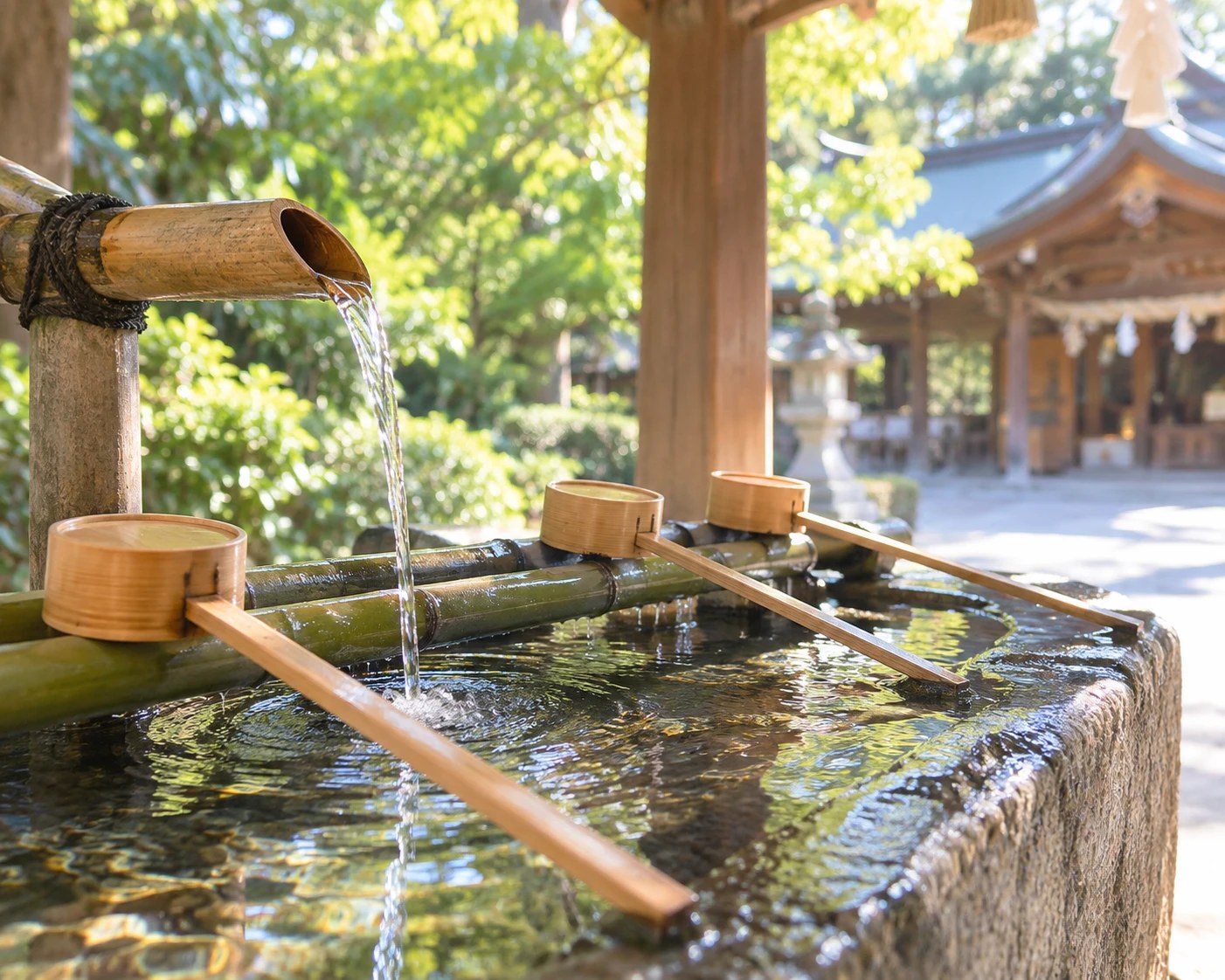
- Rinse at the temizuya (water basin): left hand, right hand, pour water into your left hand to rinse your mouth (never touch the ladle to your lips), left hand again, then tip the ladle up so the water cleans the handle
- Offer a coin gently into the offering box. Don’t throw it
- Ring the bell if there is one, then bow twice, clap twice, make your wish, bow once
At a temple, skip the clapping: put your palms together in front of your chest (gassho), pray quietly, and bow.
Omamori: Those Little Silk Charms
Omamori (お守り) are protective charms sold at shrines and temples. They’re not just souvenirs: each one is for a specific wish, and people carry them every day on bags, keys or wallets.
- Kotsu anzen (交通安全): safe travels
- Gakugyo (学業): studies and exams
- Kenko (健康): good health
- En-musubi (縁結び): love and good connections
- Shobai hanjo (商売繁盛): business success
Don’t open it. The paper or wooden tablet inside is the part that holds the blessing. Many people return their omamori to a shrine or temple after about a year (look for a box for old charms) and get a new one. Prices are usually a few hundred to around a thousand yen, depending on the shrine or temple.
Ema and Omikuji
- Ema (絵馬): small wooden plaques where you write a wish and hang it at the shrine. Visitors can write in any language
- Omikuji (おみくじ): paper fortunes. If you get a bad one, the custom is to tie it at the designated rack on the grounds and leave the bad luck behind
Goshuin: A Stamp from Your Visit
Many shrines and temples write a goshuin (御朱印), a hand-brushed seal and calligraphy, in a special book (goshuincho). Pray at the main hall first, then line up at the counter. It’s a record of a visit, not a tourist stamp, so treat it with respect.
Photos and Manners
- Photos are often not allowed inside main halls or where statues are kept. Follow the signs
- Don’t photograph people while they pray
- Keep your voice down, and eat or drink away from the main hall
- Some popular areas, like parts of Kyoto’s Gion, have their own rules about photos on private streets
FAQ
Can non-Buddhists or non-Shinto visitors pray?
Yes. Visitors are welcome to pray respectfully, whatever their beliefs.
How much should I offer?
Any amount is fine. A 5-yen coin is popular because “go-en” sounds like the word for a good connection.
Can I buy omamori for friends?
Yes, they’re a common gift. Pick one that matches the person’s wish.
Recommended Articles
- Japanese Ryokan Guide: What to Expect, Onsen Etiquette & Kaiseki
- Odawara Day Trip from Tokyo: Castle, Seafood & Hidden Gems
- One Day in Nagano: Snow Monkeys, Temple Walks, and Mountain Air
Planning a trip to Japan? We share one practical Japan tip every day on Threads: local restaurants most visitors walk past, culture explained, and what to do when things go wrong.