Quick answer: For a cold, headache or upset stomach, walk into any drugstore (Matsumoto Kiyoshi, Welcia, Sugi, Tsuruha and others) and buy over-the-counter medicine. No prescription needed. Use your phone’s camera translator on the box, learn a few key words, and ask staff for help. Stronger medicines need a pharmacist on duty, so go earlier in the day if you can.
Drugstore vs. Pharmacy: Which One Do You Need?
| Drugstore (ドラッグストア) | Dispensing pharmacy (調剤薬局) | |
|---|---|---|
| What it sells | Over-the-counter medicine, cosmetics, snacks, daily goods | Medicine prescribed by a Japanese doctor |
| Prescription needed? | No | Yes |
| Best for travelers | Colds, headaches, stomach trouble, blisters | Only after you see a doctor in Japan |
Many large drugstores have a dispensing counter inside, but for most travelers the main shop floor is all you need.
Words That Help at the Drugstore
- Kazegusuri (風邪薬): cold medicine
- Genetsu chintsuzai (解熱鎮痛剤): fever and pain reliever
- Nodo (喉): throat / Seki (咳): cough / Hanamizu (鼻水): runny nose
- Ichoyaku (胃腸薬): stomach medicine / Geri-dome (下痢止め): anti-diarrhea
- Yoidome (酔い止め): motion sickness
- Bansoko (絆創膏): adhesive bandages
Showing a word on your phone and pointing to where it hurts works surprisingly well.
How to Choose a Product
- Use camera translation (Google Translate or similar) on the box. Most packaging is Japanese only
- Look at the icons: many boxes show the symptom with a small illustration
- Ask staff: say “Kazegusuri wa doko desu ka?” (Where is the cold medicine?) or show your translated symptoms
- Read the dose on the box and follow it, even if it looks different from what you take at home
- Tell staff about allergies, pregnancy or other medicine you take before buying
Why Some Medicines Are Only Sold During Certain Hours
Stronger over-the-counter medicines (Class 1, 第1類医薬品) can only be sold when a pharmacist is in the store. Late at night, the shelf may be closed or the staff may not be able to sell them. If you need something stronger, go during the day.
Bringing Your Own Medicine to Japan
- Medicines with more than 10% pseudoephedrine (for example, some Sudafed products) are treated as stimulant raw materials and cannot be brought into Japan
- Amphetamine-based medicines (such as Adderall) cannot be brought in, even with a prescription
- Larger amounts of other medicines need an import certificate called Yakkan Shoumei, which can take weeks to get
The limits depend on the medicine, so check the Ministry of Health, Labour and Welfare (MHLW) page on bringing medicines into Japan before you fly.
When a Drugstore Isn’t Enough
- Emergency: call 119 for an ambulance
- Not sure where to go? The Japan Visitor Hotline (JNTO) at 050-3816-2787 helps travelers 24/7 in English and other languages
- Clinic: ask your hotel front desk for a nearby clinic used to foreign patients
Shopping Tax-Free at Drugstores
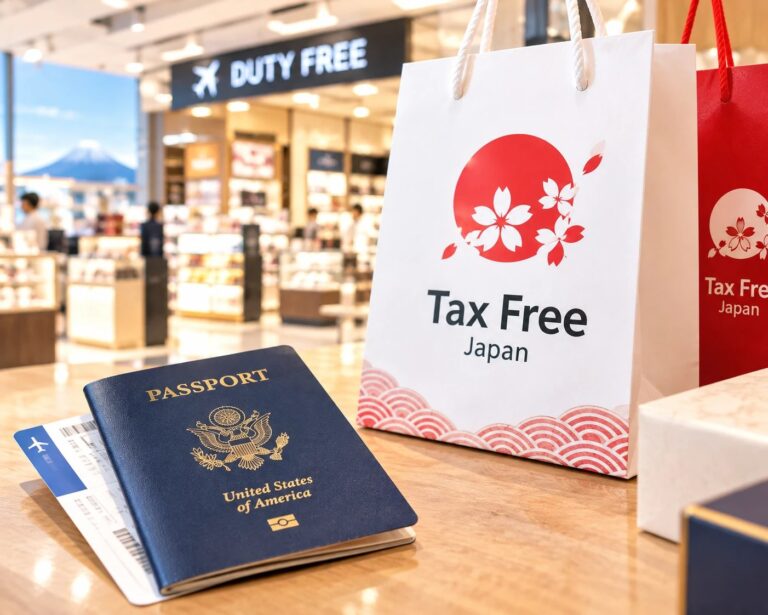
Big drugstores are popular for tax-free shopping. From November 1, 2026, Japan switches to a refund system: you pay the full price including tax at the shop, then get the tax back through customs when you leave Japan. Keep your receipts and purchases together until departure.
FAQ
Are Japanese cold medicines strong?
They work well, but doses and ingredients can differ from home. Follow the box and ask staff if you are unsure.
Are drugstores open late?
Many in big cities stay open until 9 or 10 p.m., and some later. Hours vary by store, so check before you go.
Can I buy painkillers like ibuprofen?
Yes, pain relievers are sold over the counter. Ask for “genetsu chintsuzai” and check the ingredients with your translation app.
Recommended Articles
- What Makes Japan’s Convenience Stores Amazing? FamiChiki, Bill Payment & More
- Japan’s Departure Tax 2026: What Changed and What You’ll Pay
- First-Time Tokyo with Kids: A Practical Family Travel Guide
Planning a trip to Japan? We share one practical Japan tip every day on Threads: local restaurants most visitors walk past, culture explained, and what to do when things go wrong.