[PHOTO: Departure gate at a Japanese international airport, travelers with suitcases]
If you’re planning a trip to Japan, there’s a change worth budgeting for: as of July 1, 2026, Japan tripled its International Tourist Tax — commonly called the “departure tax” or “sayonara tax” — from ¥1,000 to ¥3,000 per person. It’s a small line item buried inside your airfare, but with visitor numbers at record highs, it’s part of a bigger shift in how Japan is funding tourism infrastructure. Here’s exactly what changed, who pays it, and what it means for your trip.
What Is Japan’s Departure Tax?
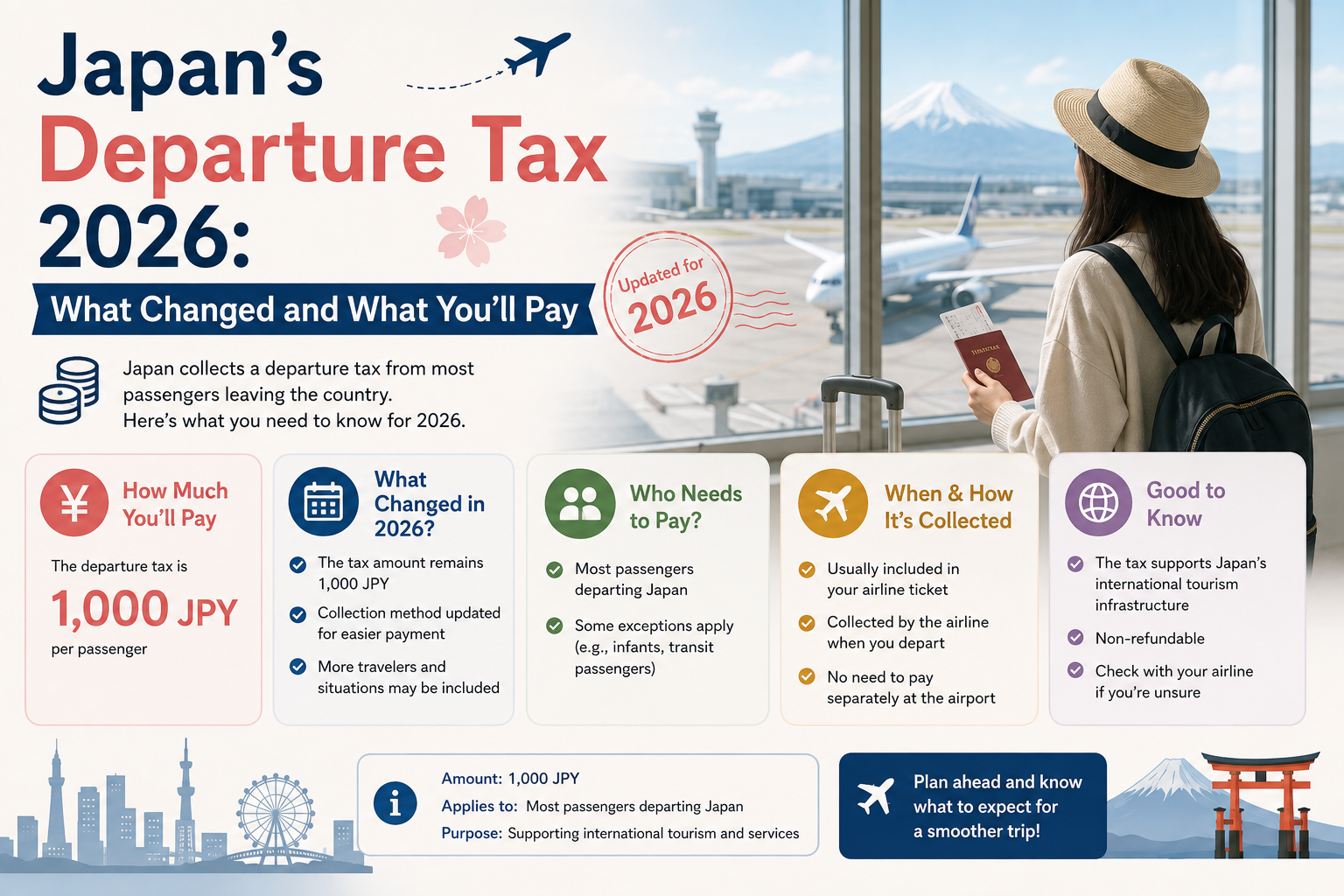
Officially called the International Tourist Tax, this fee was introduced in January 2019 and applies to nearly everyone leaving Japan by air or sea. It’s automatically bundled into your airline or ferry ticket, so most travelers never see it as a separate charge — you simply pay it as part of the total ticket price at booking.
What Changed in 2026
Starting July 1, 2026, the tax increased from ¥1,000 (about $6) to ¥3,000 (about $19) per person. The exact charge depends on your departure date, not your booking date — so if your flight leaves on or after July 1, 2026, you pay the new rate even if you booked months earlier at the old price.
| Period | Departure Tax | Approx. USD |
|---|---|---|
| Jan 2019 – Jun 30, 2026 | ¥1,000 | ~$6 |
| From Jul 1, 2026 | ¥3,000 | ~$19 |
Who Has to Pay It
The tax applies equally to foreign tourists, business travelers, digital nomads, and Japanese citizens — there’s no exemption based on nationality or visa type. It’s charged per person, aged two and older, on departure by air or sea.
Who’s Exempt
- Children under age 2
- Transit passengers who stay in Japan 24 hours or less and don’t clear immigration
If you leave the airport during a layover — say, for a few hours in Tokyo — you’ll be treated as a regular departing traveler and charged the tax on your way out.
Why the Increase
The government’s stated goal is funding tourism infrastructure: multilingual signage, reservation systems at overcrowded sites, public transport upgrades, and heritage preservation. It’s one of several 2026 measures aimed at managing overtourism — alongside new or increased local accommodation taxes in cities like Kyoto, and a separate overhaul of the tax-free shopping system taking effect November 1, 2026, which shifts from instant in-store tax exemption to a pay-first, refund-at-the-airport model.
What This Means for Your Trip Budget
In practical terms, a ¥2,000 increase per person is not going to break a Japan trip budget — it’s roughly the cost of a bowl of ramen. But if you’re traveling as a family or a group, it adds up: a family of four now pays ¥12,000 (~$76) instead of ¥4,000 (~$25) just to leave the country. It’s worth factoring in alongside the other 2026 cost changes, including October’s Japan Rail Pass price increase and rising accommodation taxes in popular cities.
[PHOTO: Family checking in at airport counter with luggage]
Recommended Articles
Frequently Asked Questions
When did Japan’s departure tax increase take effect?
The new ¥3,000 rate took effect on July 1, 2026, for departures on or after that date, regardless of when the ticket was booked.
How much is Japan’s departure tax now?
It’s ¥3,000 per person (about $19), up from ¥1,000.
Do I need to pay it separately at the airport?
No. It’s built into your airline or ferry ticket price and charged automatically — you won’t pay a separate fee at check-in or immigration.
Does the departure tax apply to Japanese citizens too?
Yes. The tax applies to everyone departing Japan aged two and older, regardless of nationality.
Is anyone exempt from the departure tax?
Children under two, and transit passengers staying 24 hours or less without clearing immigration, are exempt.
Will I be charged the new rate if I already booked my flight?
Yes, if your departure date falls on or after July 1, 2026. The rate is based on departure date, not booking date.
Is this the only new tourist-related cost in Japan for 2026?
No. 2026 also brought increased local accommodation taxes in cities like Kyoto, a JR Pass price increase from October, and a new pay-first, refund-later tax-free shopping system starting November 1, 2026.
Should this change my decision to visit Japan?
Not really — a $13 increase per person is minor compared to overall trip costs like flights, hotels, and JR Passes. It’s simply one more line item to factor into your budget.