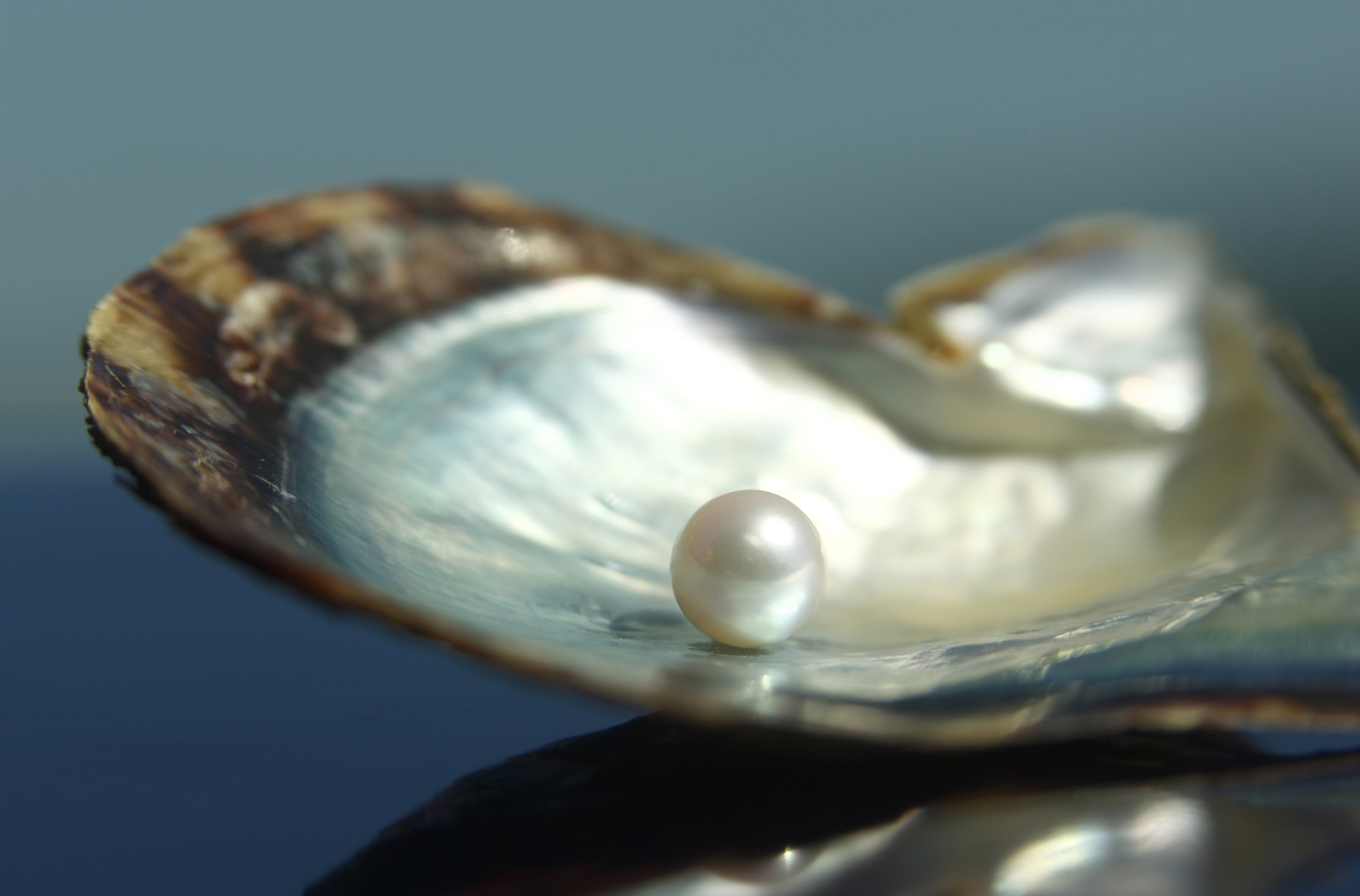
A complete guide to Japan’s most celebrated pearl destination — history, ama divers, and more
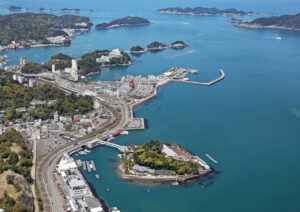
Somewhere in Toba Bay, connected to the Mie Prefecture coastline by a bridge, sits a small green island that changed the global jewelry industry forever. In 1893, a young entrepreneur named Kokichi Mikimoto succeeded in cultivating the world’s first cultured pearl here — an achievement that effectively democratized a gem that had previously been accessible only to the wealthiest people on earth. Today, the island that bears his name is one of Japan’s most distinctive heritage destinations: part museum, part introduction to pearl cultivation, home to a shop, part theatrical spectacle, and entirely unlike anything else in the country.
Mikimoto Pearl Island opened to visitors in 1951 and has been welcoming guests from around the world ever since. The roughly 7,000-tsubo (about 23,100 square meters) island holds several attractions across its compact grounds — all connected by paths through well-kept gardens with views out over the bay.
Kokichi Mikimoto: The Pearl King
Born in 1858 in Toba, the son of a noodle shop owner, Kokichi Mikimoto was drawn to the precious wild akoya oyster pearls that were being overharvested due to their high value, and grew determined to find a way to cultivate them. The idea was met with skepticism — pearl experts of the era considered natural pearls irreplicable. Mikimoto spent years experimenting, was burdened with a large amount of debt, and still persisted.
In July 1893, he achieved what had been thought impossible: a semi-spherical cultured pearl grown in an akoya oyster on his farm in Toba — at what is today Mikimoto Pearl Island. A perfectly round cultured pearl followed in 1905. By the early 20th century, Mikimoto pearls were appearing in the courts of Europe, worn by queens and aristocrats. Mikimoto himself became a global figure — presenting pearl gifts to heads of state, dressing the Statue of Liberty in a pearl necklace for a publicity stunt, and describing his life’s mission as wishing to adorn the necks of all the women in the world.
He died in 1954 at the age of 96, having transformed Toba and the broader Ise-Shima region into the center of the global pearl industry. The island bearing his name preserves that legacy.
What to See and Do
Pearl Museum (真珠博物館)
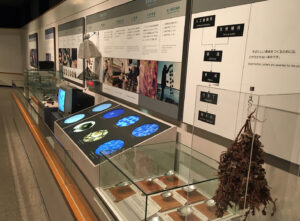
The Pearl Museum is the island’s intellectual core. Across two floors, it traces the science, history, and artistry of pearl cultivation — from the biology of the akoya oyster and the delicate nucleation process, to the global trade history of pearls and the role Mikimoto played in reshaping it. Exhibits include actual pearl-farming equipment, cross-sections of oysters at various stages, and specimens of all six major pearl oyster species used in cultivation worldwide.
The second floor shifts from science to art: a dazzling collection of pearl jewelry and decorative objects, including crowns, tiaras, and ornamental pieces from various eras. One of the highlights is a reproduction of a crown made entirely of pearls, originally created for a world exhibition — a piece that draws visitors back repeatedly.
Kokichi Mikimoto Memorial Hall (御木本幸吉記念館)
Adjacent to the museum, the Memorial Hall chronicles the life and era of the Pearl King himself. Archival photographs, personal effects, and historical documents trace his journey from noodle-shop son to global industrialist. Panels in multiple languages make this accessible to international visitors. The hall gives context to the rest of the island: the science and the commerce all connect back to one man’s relentless determination.
Ama Diver Demonstrations
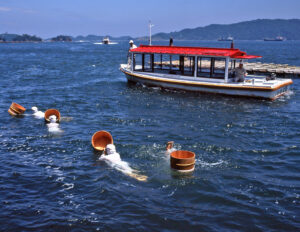
The most viscerally memorable part of a visit to Mikimoto Pearl Island is the ama diver demonstration. Several times a day, female divers in traditional white iso-gi diving garments perform live demonstrations in the bay surrounding the island — diving to depth, collecting shells, and surfacing with what looks like effortless calm. The white garments have a specific origin: they were historically believed to ward off sharks and evil spirits.
Ama divers (海女) have worked the waters of Ise-Shima for over 2,000 years, and their tradition was inscribed on Japan’s list of Important Intangible Folk Cultural Properties in 2023. They played an essential role in the early pearl industry before mechanization: it was ama who harvested the wild oysters and later maintained the pearl cultivation floats. Today, the number of active ama divers is declining sharply — all the more reason to witness the tradition while it continues. The Mikimoto demonstration is one of the most accessible places in Japan to do so.
The demonstrations are narrated live in Japanese. A paper guide with English explanations (A4, folded into quarters) is available on request for English-speaking visitors. Demonstration times vary by season; check the schedule at the entrance or on the official website.
Pearl Plaza (パールプラザ)
The Pearl Plaza houses the island’s shop and restaurant. The shop carries MIKIMOTO pearl jewelry and Mikimoto Pearl Island original items across a wide price range. For visitors interested in purchasing a Japanese pearl, this is about as authoritative a source as it gets. The restaurant serves dishes drawing on local Ise-Shima ingredients, including seafood from the surrounding bay.
Island Grounds and Views
Beyond the structured facilities, the island rewards slow exploration. Paths wind through the grounds, past a small shrine, through gardens, to viewpoints looking out over Toba Bay. On a clear day, the view of the harbor and the Ise-Shima coastline is genuinely beautiful. The island is small enough to walk end-to-end in fifteen minutes, but unhurried visitors tend to find reasons to linger.
Getting There
Mikimoto Pearl Island is located in Toba City, Mie Prefecture, within the Ise-Shima National Park. The island is reached from the mainland via the Pearl Bridge, which connects to the ticketing and entrance building on the shore.
By train, the nearest stations are Toba Station (JR Sangu Line and Kintetsu Shima Line) — a 5-minute walk from the island entrance. From Nagoya, the journey takes approximately 90 minutes by Kintetsu Limited Express. From Osaka (Uehommachi or Namba), the journey takes approximately 2 hours by Kintetsu.
By car, the island is approximately 2 hours from Nagoya via the Ise Expressway, or approximately 3 hours from Osaka. Paid parking is available nearby (2 hours: ¥600; ¥200 per additional hour).
At a Glance
| Item | Details |
|---|---|
| Address | 1-7-1 Toba, Toba City, Mie Prefecture |
| Admission | Adults ¥1,650 / Children (elementary–middle school) ¥820 |
| Hours | Varies by season — see seasonal schedule below |
| Closed | 3 days from the second Tuesday of December each year |
| Phone | 0599-25-2028 |
| Nearest Station | Toba Station (JR / Kintetsu) — approx. 5 min walk |
| From Nagoya | Approx. 90 min by Kintetsu Limited Express to Toba Station |
| From Osaka | Approx. 2 hours by Kintetsu from Uehommachi or Namba |
| By Car | Approx. 2 hours from Nagoya via Ise Expressway |
| Parking | Paid parking nearby: ¥600/2hrs, ¥200/additional hr |
| Ama Demonstrations | Multiple times daily (schedule varies by season — confirm at entrance) |
2026 Operating Hours
| Period | Hours |
|---|---|
| Mar 19 – Mar 31 | 9:00 AM – 5:30 PM |
| Apr 1 – Apr 23 | 9:00 AM – 5:00 PM |
| Apr 24 – May 6 | 9:30 AM – 5:30 PM |
| May 7 – Jul 17 | 9:00 AM – 5:00 PM |
| Jul 18 – Aug 31 | 9:00 AM – 5:30 PM |
| Sep 1 – Sep 18 | 9:00 AM – 5:00 PM |
| Sep 19 – Oct 12 | 9:00 AM – 5:30 PM |
| Oct 13 – Nov 26 | 9:00 AM – 5:00 PM |
| Nov 27 – Dec 22 | 9:00 AM – 4:30 PM |
| Dec 23 – Dec 31 | 9:00 AM – 5:00 PM |
| Jan 1 – Jan 5, 2027 | 9:00 AM – 5:30 PM |
| Jan 6 – Mar 18, 2027 | 9:00 AM – 5:00 PM |
FAQ
Do I need to book in advance?
No advance reservation is required for individual visitors. Simply purchase tickets at the entrance. Groups of 20 or more should contact the island in advance.
How long should I allow for a visit?
Most visitors spend around 1 to 1.5 hours. Those who browse the Pearl Plaza shop or dine at the restaurant may want to allow more time.
When are the ama diver demonstrations?
Demonstrations are held multiple times daily, with the schedule varying by season. Check the current schedule at the entrance or on the official website before visiting.
Is English support available?
Museum exhibits include English-language panels. The ama diver demonstrations are narrated in Japanese, but a paper guide with English explanations (A4, folded into quarters) is available on request.
Can I buy pearls here?
Yes — the Pearl Plaza shop carries MIKIMOTO pearl jewelry and Mikimoto Pearl Island original items across a range of price points, from accessible everyday pieces to fine jewelry.
Is the island suitable for children?
Yes. The ama diver demonstrations are particularly engaging for younger visitors. The museum has interactive elements. The island grounds are compact and easy to navigate with children.
Is there parking?
Paid parking is available near the island (¥600 for 2 hours; ¥200 per additional hour). If driving, allow extra time especially during peak tourist seasons.
Information based on publicly available sources and partner-confirmed details as of May 2026. Hours, admission fees, and demonstration schedules should be confirmed with Mikimoto Pearl Island directly before your visit.