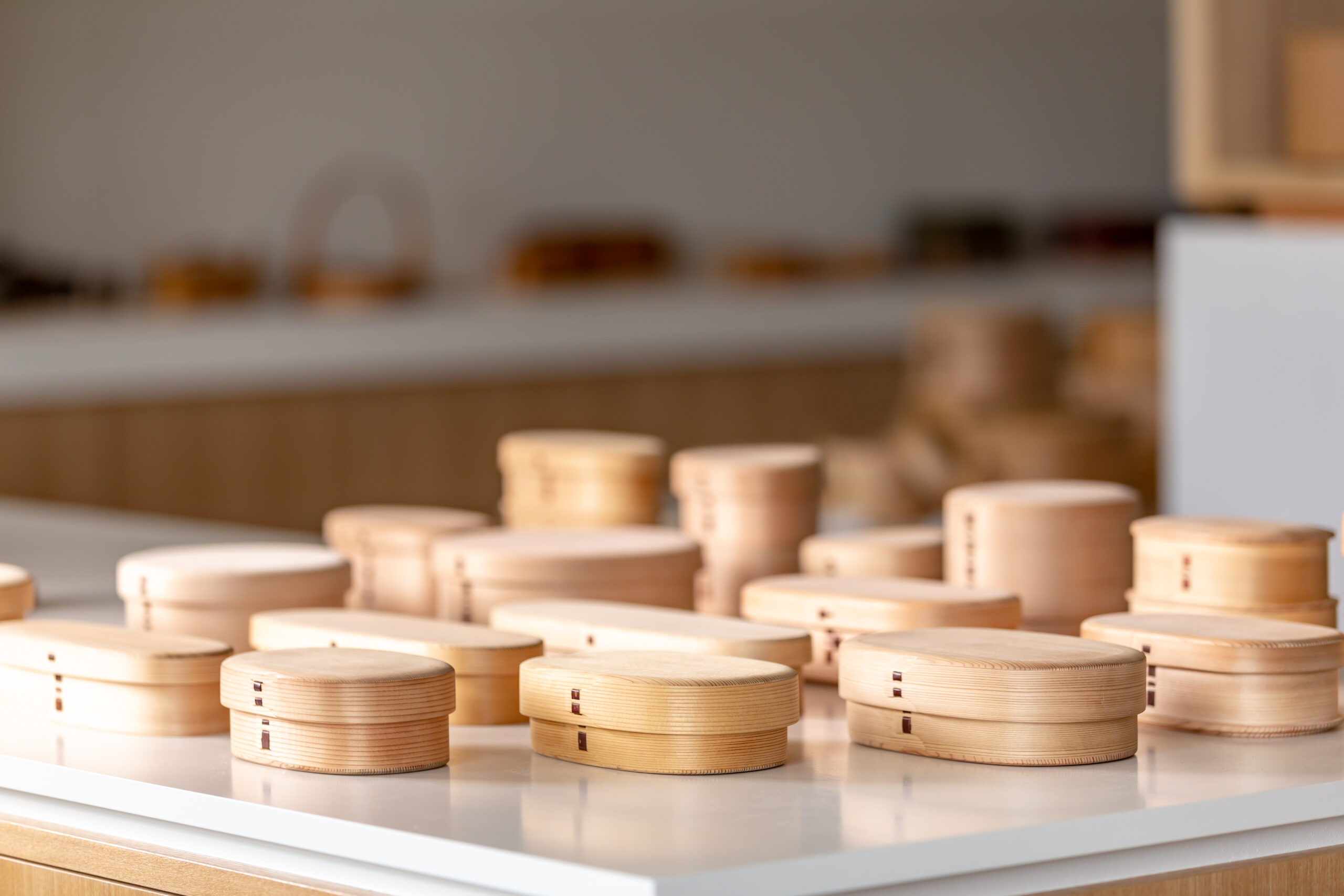
There’s a particular kind of lunch box that has become something of a cultural symbol in Japan — a pale, smooth-grained cedar container that keeps rice warm, wicks away excess moisture, and carries the faint scent of the forest into an ordinary meal. It’s called magewappa, and it has been made in the city of Odate, in Akita Prefecture, for over a thousand years. Among the handful of workshops still producing it in the traditional way, Shibata Yoshinobu Shoten is the most recognized — and one of the few places where visitors can actually try making one themselves.
The Wappa Building store, a short walk from Odate Station, houses the workshop where this hands-on experience takes place. If you’ve ever held a magewappa bento box and wondered how something this light and functional could be made by hand from a single strip of cedar, this is where you find out.
What Is Magewappa?
The word ‘wappa’ comes from an Ainu word meaning ‘ring’ or ‘round container.’ The craft itself — bending thin strips of wood into cylindrical forms — has roots going back approximately 1,300 years to the Nara period, when woodcutters in what is now Akita are said to have made simple containers from cedar offcuts. Artifacts resembling magewappa have been excavated from early Heian-period sites in the region.
The production of magewappa as a local industry took hold in the late 17th century. Odate’s feudal lord, the Satake Nishi clan, was looking for ways to relieve poverty among the domain’s residents during a period of cold-weather crop failures. Their solution: encourage the lower-ranking samurai to take up magewappa-making as a side occupation, using the abundant Akita cedar from the surrounding forests. Farmers unable to pay rice tax were put to work transporting raw timber from the mountains to the castle town. The finished products traveled via the Yoneshiro River to Sakata, Niigata, and Edo.
By the Meiji period, there were over 100 craftspeople working in the trade. The craft declined sharply with the rise of cheap plastic and aluminum containers in the postwar period, but survived — and in 1980, Odate magewappa became the only bentwood craft in Japan to receive official designation as a Traditional Craft by the Minister of Economy, Trade and Industry. Today it is experiencing a revival, driven by growing interest in natural materials, handcraft, and considered everyday objects.
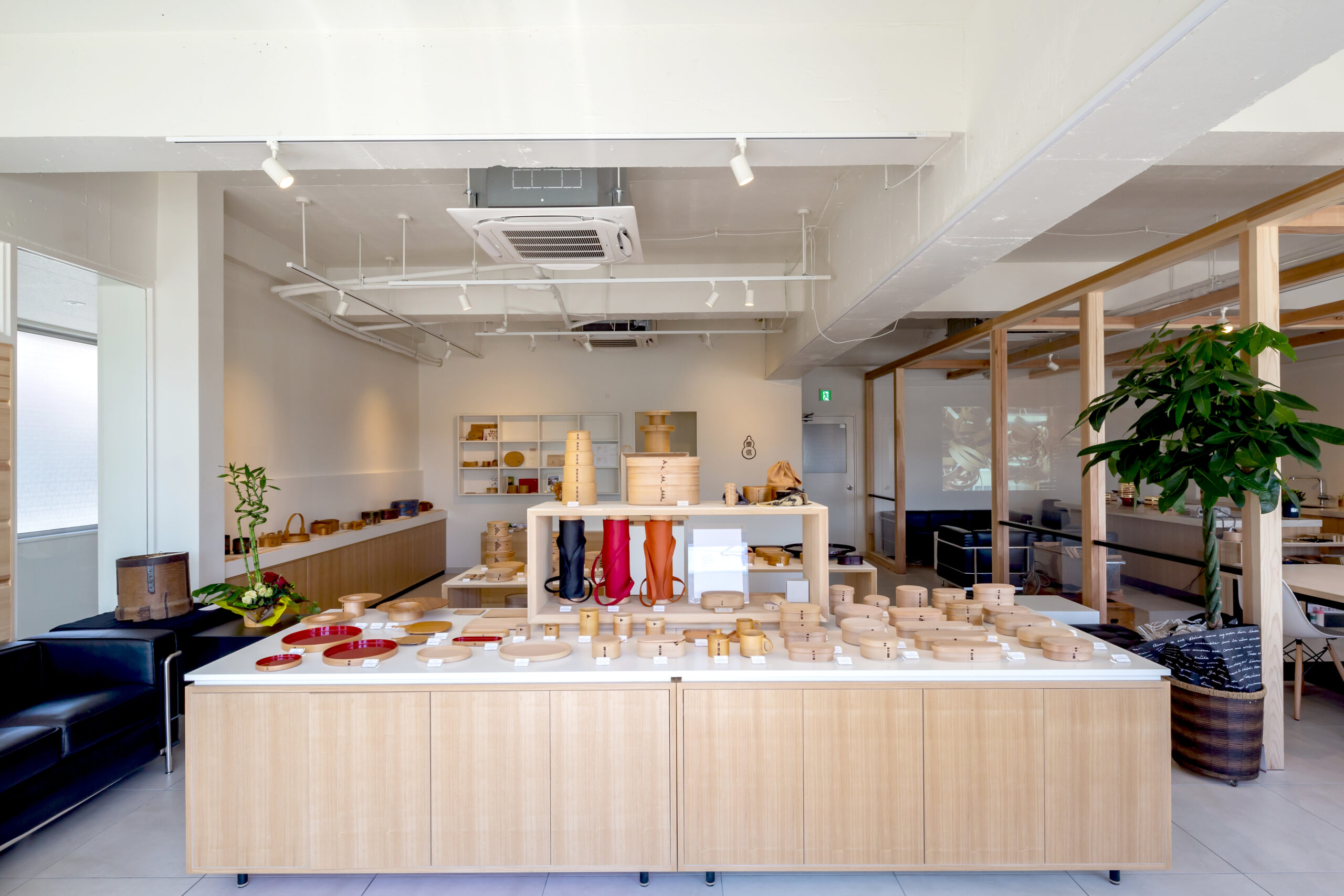
Shibata Yoshinobu Shoten
Founded by Shibata Yoshinobu in 1964, the company has spent six decades refining its approach to one clear principle: produce magewappa the traditional way, without shortcuts. The workshop uses Akita cedar — specifically, straight-grained masame cut from the heartwood of mature trees — shaped using a process that has changed little in centuries. Thin planks are soaked in hot water until pliable, bent around a form, and sewn together at the join with cherry bark (kabazuri). A fitted base is pressed into place. The result is a container that is simultaneously functional, beautiful, and remarkably light.
Shibata Yoshinobu Shoten produces a range of products — bento boxes in several sizes, rice containers (ohitsu), trays, cups, and tumblers — sold through its Odate stores and partner retailers in Tokyo, Osaka, and online. The Wappa Building facility received the Good Design Award in 2019 (Commercial Facility category), combining retail, a gallery displaying bent-wood objects from Japan and around the world, and the hands-on workshop.
The Workshop Experience
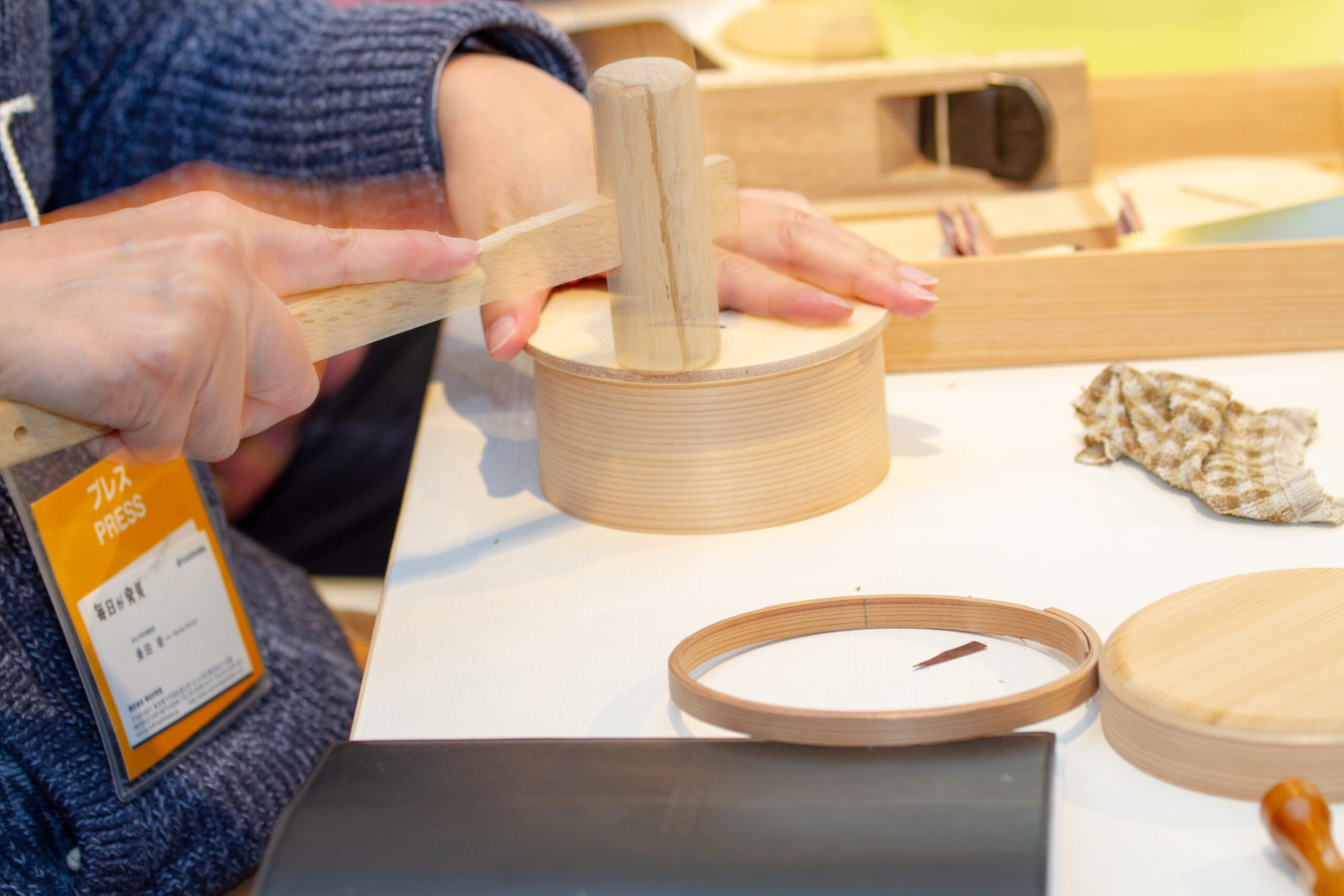
The magewappa-making workshop at the Wappa Building is an unusual thing: a genuine craft experience at a working production facility, not a tourist activity bolted onto a factory tour. Participants use real craftsperson’s tools — a wooden mallet (kizuchi), a small saw (nokogiri), and a hand plane (kanna) — to work through the key steps of the process: shaping the wood, making the bend, and joining the ends with cherry bark (kabatoji). The experience is structured around these core techniques rather than simplified for beginners.
Workshop: Bread Plate (Pan-zara) — ¥4,950 / approx. 60–90 min
A shorter, simpler introduction — a good entry point for visitors short on time or unfamiliar with woodworking. Uses real Akita cedar and real cherry bark, the same materials used in production pieces sold in the shop.
Workshop: Round Bento Box (Maru Bentobako) — ¥8,800 / approx. 90–120 min
Takes longer and produces a fully functional lunch box that participants take home at the end of the session. If you have time and interest, this experience gives a more complete sense of the craft.
Workshops run once per day — either morning or afternoon — on weekdays and the fourth Saturday of each month. Tuesday is a regular closing day for the Wappa Building store, so no workshops are held on Tuesdays. For larger groups, the studio can accommodate up to approximately 20 participants by increasing the number of instructors; groups larger than that can be arranged on request. Overseas visitors are welcome to reserve by email.
The Shop and Gallery
Adjacent to the workshop space, the Wappa Building store carries the full Shibata Yoshinobu Shoten product range: white cedar (shiraki) finishes that show the natural grain at its purest, lacquered versions in black and red, and clear-coated finishes. These are objects designed to last decades, and they improve with use. Magewappa develops a patina over time and can be restored through re-lacquering by the workshop.
The gallery section displays a collection of bent-wood objects gathered from across Japan and internationally — contextualizing Odate’s craft within a broader tradition of bentwood making. For visitors with an interest in craft, material culture, or design, it’s worth pausing here before or after the workshop.
Getting There
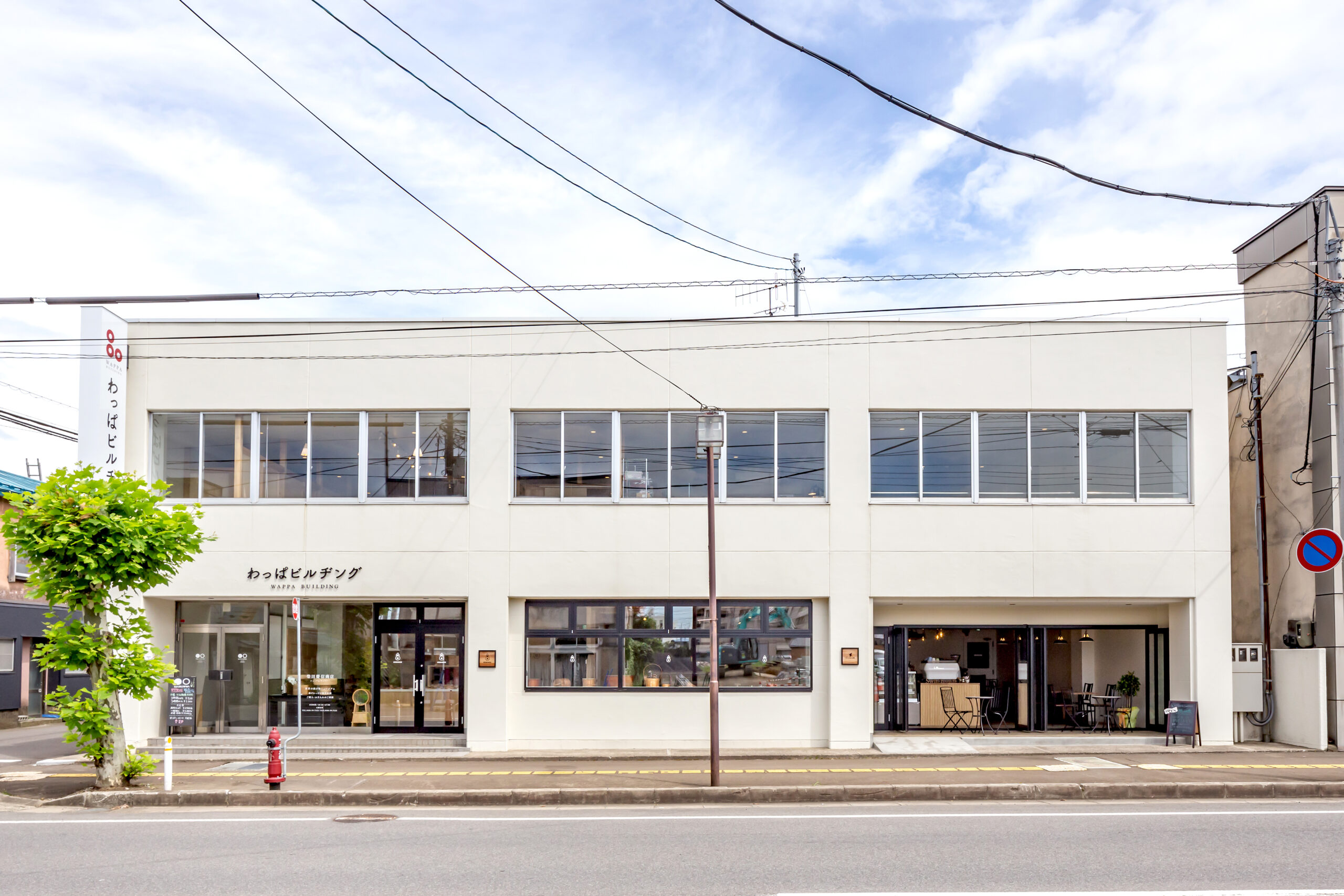
Odate City is in northern Akita Prefecture, approximately 80 minutes from Akita Station by JR Ou Main Line. The Wappa Building store is approximately a 3-minute walk from Odate Station.
By Shinkansen, the nearest hub is Akita Station (Komachi/Tsubasa lines from Tokyo, approximately 4 hours). From Akita, take the JR Ou Main Line to Odate Station (approximately 80 minutes).
By car, Odate is approximately 10 minutes from the Odate Minami IC on the Akita Expressway.
At a Glance
| Wappa Building Store | 1-12-27 Onaricho, Odate City, Akita / Tel: 0186-59-7123 |
| Wappa Building Hours | 10:30 AM – 5:00 PM / Closed Tuesdays (and irregular closures) |
| Head Store / Factory | 2-15-28 Onaricho, Odate City, Akita / Tel: 0186-42-6123 |
| Head Store Hours | 10:00 AM – 5:00 PM / Closed Sat, Sun, and holidays (except 4th Sat) |
| Workshop: Bread Plate | ¥4,950 incl. tax (approx. 60–90 min) |
| Workshop: Round Bento Box | ¥8,800 incl. tax (approx. 90–120 min) |
| Workshop Schedule | Once per day (morning or afternoon) / Weekdays and 4th Saturday only / Closed Tuesdays |
| Group Capacity | Up to approx. 20 in the Wappa Building; larger groups on request |
| Reservation | Required — call or email in advance: 0186-59-7123 |
| Overseas Reservations | Email reservations accepted |
| English Support | Not available; staff use smartphone translation apps |
| Nearest Station | Odate Station — approx. 3 min walk |
| From Akita Station | Approx. 80 min by JR Ou Main Line |
| By Car | Approx. 10 min from Odate Minami IC (Akita Expressway) |
FAQ
Do I need to reserve in advance?
Yes — reservations are required. Contact the Wappa Building store (0186-59-7123) or reach out by email. Workshops run once per day on weekdays and the fourth Saturday of each month; Tuesdays are closed.
Which workshop should I choose?
The bread plate (¥4,950) is a good introduction — shorter and simpler, but still uses real materials and real tools. The round bento box (¥8,800) takes longer and produces a fully functional piece you’ll use at home. If you have time and interest, the bento box experience gives a more complete sense of the craft.
Do I need prior woodworking experience?
No experience is required. The workshop is guided by craftspeople who will take you through each step. That said, it is a genuine craft experience with real tools — not a simplified souvenir activity. Come prepared to concentrate and follow instructions carefully.
Can I take my piece home the same day?
Yes — completed pieces are taken home at the end of the session.
Is English support available?
The workshop does not offer English-language instruction. Staff communicate with international visitors using smartphone translation apps. Come ready to follow along visually and through demonstration.
Can overseas visitors make a reservation?
Yes — email reservations are accepted for guests based overseas. Contact the Wappa Building store to arrange your booking.
Can I buy magewappa at the store without doing the workshop?
Yes. The Wappa Building store and the Head Store carry the full product range. No reservation is needed to visit as a regular customer.
What is the price range for magewappa products?
Trays, cups, tumblers, and smaller items are available at various price points. Ohitsu (rice containers) and specialty pieces are priced higher. All products are made by hand from Akita cedar. Please confirm current pricing directly with the store.
Last updated: May 2026 | Information based on partner-confirmed details. Prices, schedules, and availability should be confirmed directly with Shibata Yoshinobu Shoten before your visit.