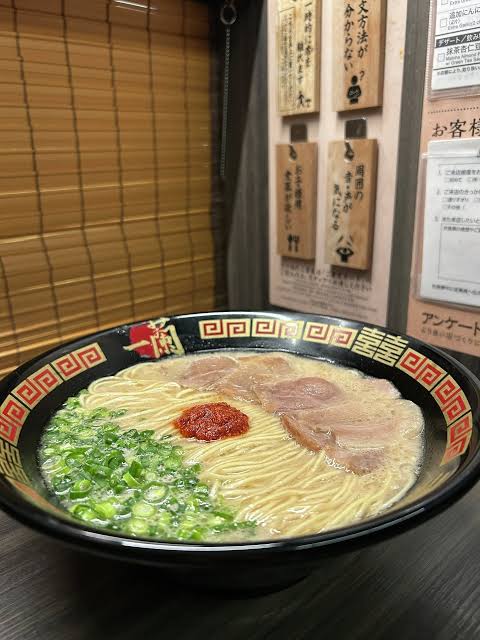
The first time I walked into an Ichiran in Shibuya, I had no idea what I was doing. There was a vending machine, a bamboo curtain, and absolutely no one to talk to. Twenty minutes later, I was slurping the best bowl of ramen I’d had in Japan — alone, in silence, completely content.
The History of Ichiran Ramen
Ichiran began in the 1960s in Fukuoka, the birthplace of Hakata-style tonkotsu ramen. Originally a humble street stall, it rebranded under its current name in 1993 and quickly carved out a niche with a bold concept: a dining experience built entirely around the act of tasting.
The founder wanted to eliminate distractions and let the ramen speak for itself. This philosophy gave rise to Ichiran’s now-famous “flavor concentration booths” — private partitioned counters where you eat in solitude, with nothing between you and the bowl.
Today, Ichiran has locations across Japan and in cities like New York, Hong Kong, and Taipei. But its spiritual home remains in Fukuoka, where locals still queue for the original tonkotsu broth.
What Makes Ichiran Unique
The Flavor Concentration Booth
The individual dining booth is the heart of the Ichiran experience. You sit at a small partitioned desk facing a wooden counter and a bamboo curtain. When your ramen is ready, staff briefly lift the curtain to place the bowl, then lower it again — leaving you in peaceful, distraction-free concentration.
It serves three purposes: it sharpens your focus on the flavor, it makes solo dining completely comfortable, and it gives the whole meal a quietly ceremonial feel that’s unlike any other restaurant in the world.
For many foreign visitors, it feels strange at first. By the time the bowl is empty, it’s usually one of the most memorable meals of the trip.
Customization Through the Request Sheet
Before your ramen arrives, you fill out a paper order sheet with your preferences:
- Flavor strength (light to strong)
- Richness of broth
- Amount of garlic
- Spiciness level (none to fiery red sauce)
- Green onion or no green onion
- Pork slices (chashu)
- Noodle firmness (from extra soft to extra firm)
This level of personalization means every bowl is technically your bowl. Most regulars develop a preferred combination after a visit or two — and come back to refine it.
The Tonkotsu Broth
Ichiran’s broth is made by simmering pork bones for hours until they release a creamy, umami-rich base. It’s silky and aromatic without being heavy or greasy — a balance that takes years to perfect. First-time visitors often describe it as “comforting,” “addictive,” and “something you think about the next day.”
How to Order at Ichiran: Step by Step
The ordering process is part of the fun. Here’s exactly what to do:
Step 1: Buy Your Ticket at the Vending Machine
Almost every branch has a vending machine at the entrance. Select your ramen (standard tonkotsu is the default), and add extras if you want — extra chashu, a seasoned egg, seaweed, additional noodles (kaedama), or extra toppings. Most machines now have English options. If not, the picture buttons are easy enough to follow.
Step 2: Fill Out the Request Sheet
Once seated in your booth, you’ll find the customization sheet on the counter. Mark your preferences for broth strength, noodle firmness, spice level, and toppings. Take your time — there’s no rush.
Step 3: Hand Over Your Ticket and Sheet
Place both on the counter. A staff member will collect them from behind the bamboo curtain without making eye contact. It sounds odd; it works perfectly.
Step 4: Eat
The curtain lifts briefly. Your bowl appears. The curtain closes. You eat.
Step 5: Order Kaedama (Extra Noodles)
If you finish your noodles but still have broth left, press the call button and request kaedama — a fresh serving of noodles dropped directly into your remaining soup. It costs a small extra fee and is absolutely worth it.
Recommended Branches for Tourists
Shibuya, Tokyo
A short walk from Shibuya Crossing, this branch is the most convenient for tourists. It’s open late (often 24 hours) and popular with foreign visitors. Expect a queue on weekends.
Shinjuku, Tokyo
A few minutes from Shinjuku Station, this branch is ideal for a late-night bowl after exploring the area. Busy on weekends, but the turnover is fast.
Dotonbori, Osaka
Located along Osaka’s famous neon-lit canal street, this branch pairs perfectly with a night of street food in the area. Often crowded, always worth the wait.
Hakata, Fukuoka
The original home of Ichiran. Considered a pilgrimage destination for ramen fans. The broth here feels different — not technically, but emotionally. Eating tonkotsu in its birthplace just hits differently.
Tips for First-Time Visitors
- Timing: Avoid the lunch rush (noon–2pm) and dinner peak (7–9pm). Mid-afternoon or late night is much calmer.
- Language: Most branches provide English menus and order sheets. Staff are used to foreign visitors.
- Payment: Bring cash for the vending machine. Some locations now accept IC cards and credit cards, but cash is the safe bet.
- Noodle firmness: Locals recommend katamen (firm) or harigane (very firm). Soft noodles tend to go mushy in the rich broth.
- Getting around: If you’re planning to visit Ichiran in multiple cities, a JR Pass makes travel between Tokyo, Osaka, and Fukuoka much easier.
Why People Keep Coming Back
Ichiran works because it respects your time, your preferences, and your solitude. In a country that already does hospitality better than almost anywhere else, Ichiran takes it a step further by designing an experience that’s entirely about you and the bowl in front of you.
For tourists, it’s accessible, affordable, and completely different from anything back home. For locals, it’s reliable — the broth tastes the same in Fukuoka as it does in Shinjuku, every single time.
Last updated: May 2026. Menu options and pricing may vary by location. Always check the official Ichiran website for the latest information.
Frequently Asked Questions
Is Ichiran good for first-time ramen eaters?
Yes. The tonkotsu broth is rich but approachable, and the customization sheet lets you dial down the intensity if you’re new to strong flavors. It’s one of the most tourist-friendly ramen experiences in Japan.
Can I go to Ichiran with a group?
Yes, though the booth system means you’ll be seated individually rather than side by side. Some branches have a group seating area, but the solo booth experience is the real Ichiran.
How much does Ichiran cost?
A standard bowl costs around ¥980–¥1,200 depending on the location. Extras like chashu, eggs, and kaedama add a few hundred yen each. It’s a reasonable price for the quality.
Do I need to speak Japanese to order at Ichiran?
Not at all. Most major branches have English menus and order sheets. The vending machine often has an English option, and the process is designed to require minimal communication.
What does “kaedama” mean?
Kaedama refers to an extra serving of noodles added to your remaining broth once you’ve finished the first portion. You request it by pressing a button or filling out a small slip. It’s a Hakata ramen tradition.
Is Ichiran open 24 hours?
Many branches are open 24 hours, especially in busy areas like Shibuya and Shinjuku. Hours vary by location, so check the Ichiran website before heading out late.
Which city has the best Ichiran?
The Fukuoka Hakata branch is considered the original and holds a special place for enthusiasts. That said, Ichiran’s broth is remarkably consistent across all locations — you won’t be disappointed wherever you go.